Showing posts with label animals pond. Show all posts

Sunday, May 20, 2012

Picture Books (Science): Pond Life

I love to visit a local pond which is tucked away in the middle of town.  I look forward to spring when there are animal babies. During a recent trip, I saw so many exciting creatures, such as ducklings, goslings, a water snake, turtles, tadpoles, and a blue jay.   Today, I highlight my five favorite juvenile books about pond life.  I hope you get a chance to visit a pond this spring.  Either way, these selections are sure to inspire young explorers.  


Jo MacDonald Saw a Pond (by Mary Quattlebaum):
Like its title suggests, this fun story cleverly uses the beloved “Old MacDonald” song as inspiration.  The narrative follows a young girl’s exploration of a pond on her family farm.  She carries with her a notebook where she draws the plants and creatures she finds. The soft, watercolor illustrations are contrasted with a white background, keeping it simple and focused on the pond itself.  There is a great use of onomatopoeia.  For instance, the reeds go “swish, swish,” the deer “flick, flick” (as it drinks), and the dragonflies “whir, whir.”  As the exploration ends, Jo runs to playfully share her drawings with “Old MacDonald.” The closing pages reveal her drawings as wells as facts about ponds, additional resources on them, and ways to be a young naturalist.  Jo MacDonald Saw a Pond is ideal for ages 3-8. 


Pond Walk (by Nancy Elizabeth Wallace):
On summer morning, Buddy and Mamma decide to go on a pond walk.  Buddy wants to see a turtle more than anything!  As he investigates, his mamma helps him identify insects and animals.  They discuss what they know about them and tell silly jokes.  Buddy draws a picture of each creature and plant he sees like whirling beetles, a frog, cattail plants, dragonflies, a lily pad, and a salamander. The duo share a picnic lunch at the pond before heading home.  They finally spot a turtle but in an unexpected way!  The illustrations are typical of Wallace’s style—simple shapes using paper collage, photographs, and colored pencils.  Instructions at the end demonstrate how you can make a rock turtle with your little ones.  Pond Walk is a fun book for ages 3-8. 
This narrative is hosted by none other than the Cat in the Hat who teaches his child companions all about pond life. Though it is written in free verse poetic form with simple vocabulary and sight words, it delves into things big and small at the pond.  He begins by introducing microscopic organism like spirulina and amoeba.  Readers get a look at what can be seen in a microscope.  Next, he shows the snails, worms, and leeches on the pond’s floor.  Thing 1 and Thing 2 stop by to help out with the difference between a complete and an incomplete metamorphosis. Much more is revealed about the fish, insects, and other animals that make up this habitat. The narrative ends with one of the Cat’s unusual antics.  I recommend Would You Rather Be a Pollywog for ages 5-9.  Early Reader,


Looking Closely Around the Pond (by Frank Serafini):
This selection begins with a spy-hole view of a small part of something in the pond surroundings. The text asks, “Look very closely. What do you see?”  Several suggestions are made as possibilities.  Children can pick one of them or make their own guesses.  Turning the page reveals the animal or plant in full.  Two short paragraphs are written about each one.  For animals, their habits, such as eating, nesting, and protecting themselves, is disclosed.   For plants, their role in the pond habitat is explained.   This same pattern is repeated for each one like the box turtle, shubunkin, mallard duck, dragonfly, water lily, cattail, and tiger salamander.  The final page reveals a sweeping view of the pond at dusk.  The photograph illustrations are vivid and striking.  Looking Closely Around the Pond is recommended for ages 5 and up.


Life in a Pond (by Adam Hibbert):
This brilliant book is oozing with stunning photographs of plant and animal life.   There are so many amazing close-up shots from everything from algae and microscopic volvox to killer grubs and water boatman.  The fascinating text delves into the lives of the northern water snake, the great blue heron, the fearsome mink, and the red-spotted newt.   Creepy crawlers also abound like snails, mosquitoes, grubs, and leeches.  A snapshot of some of the most interesting information is given on each one.  Life in a Pond is a visual delight that ages 7 and up will love! 

Sunday, May 6, 2012

Picture Book (Science): Look Once, Look Again Series


I love perusing through the books in the library.  During one of my library explorations, I found an amazing book set for science exploration called Look Once, Look Again (by David M. Schwartz).  There are 24 books in the series broken into two subsets: Exploring Habitats and Exploring Plants & Animals.  I previewed three of them:  At the Pond, Underfoot, and In the Park.

The books follow a pattern.  For the Look Once page, a close-up picture of some part of an animal or plant is shown with a riddle of sorts.   In the Pond, for example, begins with a photograph of two connected circles with smaller circles inside them.  The riddle is:  “This insect has enormous eyes.  Some people think it is as scary as a dragon.”  Then, the reader/listener has the opportunity to guess what is depicted.   On the back page is the Look Again  picture with a dragonfly depicted and a few details about it (The Look Once picture is an extreme close-up of the dragonfly's eyes).  The facing page on the right has a new Look Once picture.  The Look Once, Look Again pattern continues until the end.  The final pages offer an opportunity for review. 

I like this series because it prompts reader/listener interaction and critical thinking skills.  Young children will have fun predicting what living thing is revealed in word and photograph as well as the joy of success as they get it right (if not the first time, in successive reading sessions).   Another great aspect of the series is that it encourages children to look carefully at the world around them and to make their own observations about it.   The captivating and vivid photographs by Dwight Kuhn, also, make this series worthwhile.  Every page feels like a new discovery and wonder. 

There is a book for many of the most common early childhood science experiences.  The titles are:  Among the Flowers, Animal Ears, Animal Eyes, Animal Feathers and Fur, Animal Feet, Animal Mouths, Animal Noses, Animal Skin & Scales,  Animal Tails, At the Farm, At the Pond, At the Seashore, At the Zoo, Fruit & Seeds, In a Tree, In the Desert, In the Forest, In the Garden, In the Meadow, In the Park, Plant Blossoms, Plant Leaves, Plant Stems & Roots, and Underfoot.   I recommend utilizing this series before visiting or studying these locations/subjects.  The Look Once, Look Again series is ideal for ages 3-8. 

This post is linked up with Science Sunday at Adventures of Mommydom where there are always dozens of amazing science-related posts.  


Wednesday, February 29, 2012

Picture Book (Science): Animalogy, Animal Analogies (by Marianne Berkes)

Animalogy is not your traditional book about animals.  Instead, author Marianne Berkes compares and contrasts various creatures from insects to mammals using analogies.   Behaviors, sounds, body parts, and classifications are just some of the comparisons made between creatures that on the surface appear to have no connection.  Here is a sample:  

Robin is to wing, as goldfish is to fin.
Beaver is to build, as spider is to spin.

Youngsters have the opportunity to discover the connections within the analogies and to practice creating their own using similar patterns.  In addition, each pair (as exemplified above) of analogies ends in rhyme.  Children can identify the rhyming words and brainstorm other related ones. 

CathyMorrison, illustrator, depicts her subjects in minute detail—whether it is the fins on a goldfish or the hairs on a spider’s legs.  Every living thing is beautifully portrayed in its natural habitat.  Readers catch a glimpse of the African savannah, rocky mountain terrain, dense forests, and much more!   Each page and comparison is a starting point for lively discussion and interaction between adult readers and child listeners. 

I recommend Animalogy for ages 4-9.  It is a excellent resource for teachers and parents.  For additional resources to extend student learning, visit the Sylvan Dell website for a FREE full-color 48-page color teaching guide full of exciting and educational ideas.


This post is linked up with Enchanted Thursday blog hop at Enchanted Homeschooling.  


Friday, February 25, 2011

Stunning Non-Fiction Picture Books about Animals by Nic Bishop

I have to rave about an amazing photographer—Nic Bishop!  His photography has been featured in over 20 dazzling non-fiction picture books, focusing on animals, insects, arachnids, and nature.  I previously highlighted his book Chameleon, Chameleon.   Nic Bishop is both author and photographer of three books on vertebrate animals—Frogs, Lizards, and Marsupials.  The illustrations alone are worth the price of the book!  Mr. Bishop captures amazing shots of animals in their natural habitats.  The text is engaging and fascinating.   Facts about each animal’s diverse habitat, diet, life cycle, and habits are captivatingly revealed.  As I read them, I was in awe of God’s staggering creativity.   I thoroughly enjoyed each of these books. 


I learned there are over 200 different marsupials, many with unique characteristics.   There are gorgeous pictures of koala bears, wombats, and kangaroos.   Lesser known marsupials are included like a numbat, Tasmanian devils, a quoll, a fat-tailed dunnart, and a bilby.   Witness frame-by-frame in a double-page pull out as a sugar glider leaps from a branch, soars through the air, and lands safely.   View kangaroos wrestling and a baby koala resting on her mother’s back as she sleeps.  Every page is a wonder! 


Lizards  
The habitats of lizards range from under the desert sands to high in tropical trees, making their lives intriguing and varied.  Observe a gliding gecko soar to a neighboring branch and a basilisks walk on water.  Close up shots of Africa’s Jackson chameleon (looks like a prehistoric dinosaur), a flying dragon in mid-air, a leaf-tailed gecko camouflaged, and an Australian frilled dragon puffing itself up are just some of the must-see photographs in the book.


Frogs  
The pictures of these colorful creatures are so dazzling it is hard to believe they are real!   One of the most stunning pictures is of a frog mid-air (water dripping down from him he leaps out of the pond) snatching a caterpillar with its tongue from a leaf hanging over the water.  The 2-page double spread depicts frame-by-frame a frog bounding from the shore, through the air, and into the water.   See through the underbelly of a glass frog hanging on a vine and witness a young tadpole being caught by a giant water bug.   My favorite pictures, though, are of the vibrant tree frogs! 


To learn more about his many other titles, click here. 

Thursday, February 10, 2011

Science: Picture Books to Teach about Animals and Hibernation

In my research for books about snow day experiences, I came across Under the Snow by Melissa Stewart. This book does not fit my previous topic, but it is perfect for another related one:  hibernation.  After some research on this new topic, I have some great finds to accompany formal or informal instruction.  Here is a list of some picture books to include in your study of animals and/or hibernation.


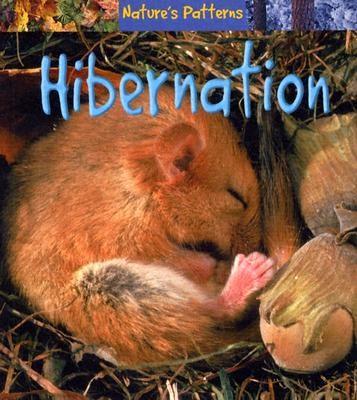
Hibernation (ages 5-10) by Anita Ganeri  (non-fiction) 
Hibernation offers stunning hibernating photographs of various animals—dormouse, woodchuck, bats, snakes, toadfish, turtle, and more.  Beginning with a definition, hibernation is discussed as a pattern or cycle.  The lives and habits of animals preparing for, experiencing, and coming out of hibernation are covered in an easy narrative text.  General facts are presented as well as specific ones about unique animals.  Key words are bolded and highlighted, such as burrow, energy, nurse, pattern, and temperature.  Hibernation is an excellent resource for instruction. 


Under the Snow (ages 5-10) by Melissa Stewart (realistic fiction)  
On a snowy afternoon, a young family trudges through the snow, ready to sled and to skate.  As they are enjoying their winter wonderland, the lives of hibernating animals are revealed.  The crevice of an old stone wall offers a place for ladybugs to huddle together and a snake to curl up to sleep.  Near the wall, a vole digs tunnels through the snow and under the ground nearby a chipmunk is seen snoozing in his burrow of leaves and grass.    As they move into the forest, other hideouts are illuminated—a butterfly in a pile of brush, some insects in a rotting log, and a frog in a pile of leaves.   Underground, a spotted salamander and a woodchuck wait out the cold months.  Finally, animals in and around the pond are seen hibernating or resting, like bluegills, carp, a frog, and a turtle.   Time’s passage is illustrated as spring returns.  Hibernating animals begin to emerge.  Beautiful text and vivid illustrations make Under the Snow essential to any study of hibernation.

Other Worthy Titles:
Every Autumn Comes the Bear (ages 3-7) by Jim Arnosky (realistic fiction) 
A bear returns to the same place each year.  As he makes his way to his den, he observes other animals preparing for the winter weather.

Bedtime for Bear (ages 3-8) by Brett Helquist (fantasy fiction)   As Bear settles down for his long winter’s nap, his two raccoon friends goad him outdoors to play in the snow.  Bear experiences a day of fun in the snow before finally going to sleep for the winter. 

Sunday, December 5, 2010

Best Bedtime Story Picture Books

Instead of covering the well-known and beloved picture books—like Good Night Moon and Where the Wild Things Are—, I focused on lesser known favorites.  Each selection is about the bedtime ritual.  These books are a soothing and peaceful way to settle young children down for the night.  They are wonderful ideas for Christmas or birthday gifts.  They are the perfect addition to any home library. 

Pajama Time! (ages birth-4) by Sandra Boynton 
As the moon comes up and it gets late, it is time to celebrate bedtime because:  It’s Pajama Time!   Animals put on their pajamas—whether they are old or new, red or blue.   They celebrate by dancing in a line, no matter what their pajamas look like—stripey, polka dot, or the ugliest ever seen.  Finally, all the animals hop into bed and turn out the light, so they can have a party in their dreams.  This board book is a wonderful first night time reader with amusing illustrations and rhythmic text that babies, toddlers, and preschoolers will enjoy. 

Little Quack’s Bedtime (ages birth-5) by Lauren Thompson 
Mama Duck is putting Little Quack and his four siblings to bed for the night, but they are having difficulty getting settled.  First, they see flashing in the dark, but Mama Duck reveals to them that the lights are only fireflies as she reminds them it is sleepy time.  Widdle shuts her eyes and goes to sleep.  The four remaining ducklings hear a “Whooo!” noise.   Again, Mama Duck assures her little ducklings it is nothing to fear; it is just an owl.  This pattern continues until Little Quack asks, “Why, oh, why is the night so dark?”  Little Quack learns it is so the stars can shine their twinkling lights.  Calmly, Little Quack shuts his eyes and goes to sleep.   Young children will be reassured that the sights and sounds of the night are nothing to fear.  They will love the adorable ducklings and vivid illustrations! 

Tuck Me In!  (ages 2-5) by Dean Hacohen & Sherry Scharschmidt 
The stars are out, so the big question is: Who needs to be tucked in?  Various baby animals—pig, zebra, elephant, alligator, hedgehog, and peacock—say, “I Do.”   The reader turns a half page which becomes a colorful blanket that covers up and tucks in the animal.  The format continues by wishing each animal baby good night.  Then, the same question is posed each time, “Who else needs to be tucked in?”  Finally, it shifts to ask the listening child if he needs to be tucked in.  

 How Many Kisses Do You Want Tonight? (ages  3-6) by Varsha Bajaj 
 It is nighttime on the farm and in the forest.   Each little animal snuggles up in a cozy place with a parent who asks, "How many kisses do you want tonight?"   The baby animals lightheartedly, respond with a number one to ten (in ascending order).  A father asks his little girl princess and a mother inquires of her little boy knight how many kiss they want tonight.  The final question to the listener is, “How many kisses do YOU want tonight?”  

Shhhhh! Everybody’s Sleeping (ages 3-6) by Julie Markes 
Various community helpers are seen sleeping—teacher, librarian, doctor, fireman, postman, and so forth.  The narrative assures the young child that everything is done, and all is safe.  Even the president is sleeping, and he has the most important job of all!  It is time to go to sleep now, just like the sun.  The listener is told, “Good night, sleep tight, my sweet little one.”   The final picture is a small child sleeping with his stuffed rabbit.    

How Do You Say Good Night? (ages 3-7) by Raina Moore 
This soothing tale illustrates the numerous ways to say good night.  The animal characters are individually asked how they say “good night” which is followed by a rhyming poetic tercet.   Loving parents help their children get ready for bed with hugs, kisses, story time, bath time, and tucking in.  Comforting images of soft pillows, comfy pajamas, and warm bath water fill the pages.  Finally, the narrative shifts to a little girl being tucked in to bed by her mother who kisses her cheek and turns off the light.

Going to Sleep on the Farm (ages 3-9) by Wendy Cheyette Lewison 
This book inspired me to research and to list these lesser known bedtime gems.  I love to read it to my children at night.  It begins with a boy playing with his plastic animals as he dad looks on.  The boy asks, “How does a cow go to sleep—tell me how?  How does a cow go to sleep?”  The father answers, “A cow lies down in the soft, sweet hay, in a cozy barn at the end of the day.  And that’s how a cow goes to sleep—Moo-moo.”  This same pattern is followed as the boy asks about the other farm animals.  The illustrations switch between a real animal settle down for the night and the boy playing and talking with his father.  The closing images are of the father carrying the boy to bed, the finally, the boy going to sleep. 

The Dreamtime Fairies (ages 4-7) by Jane Simmons 
Lucy loves to tell stories.  Each night, she falls asleep telling Bear stories.  Her little brother Jamie, though, sees things in the shadows at bedtime, so he tosses and turns.  One night Lucy tells Jamie that Bear can’t sleep eitherthey need to find the Dreamtime Fairies.  Together they imaginatively travel across the ocean, through the jungle, and eventually, into the shadows where they dance and play with the Fairies.  Lucy’s story teaches him that there is no need to be afraid of the shadows because that is where the Dreamtime Fairies fly. 

Time to Say Good Night (ages 4-8) by Sally Lloyd Jones 
For those who love the illustrations (and characters) in the Bear series by Karma Wilson, you will enjoy this bedtime lullaby illustrated by the same author, Jane Chapman.  Forest animals—bunnies, birds, squirrels, bears, deer, and mice—are each told to settle down for the night and go to sleep.  Then, there are 2 two-page spreads of the animals snuggled up together with their families.  The animal parents then ask, “What about YOU, sleepyhead?  Guess whose turn it is for bed?”  The listener is told no more dances or chat; no more wanting this and that.  It is time to go so sleep. 

A Better Way to Teach Theme: Why I Built the Jory John Now Prove It Series

If you’ve ever taught theme, you know the moment. Students finish a story, you ask “What’s the theme?” — and suddenly you’re flooded with a...