Showing posts with label feeling angry. Show all posts

Tuesday, July 5, 2016

Tantrums, Hurt Feelings, and Selfishness: Helping Children Deal With Their Emotions

Books are ideal springboards for discussing a wide array of emotional responses.  With picture books, parents and educators can help children identify their feelings and deal with them in an healthy manner. The following 10 picture books focus on some of the most common emotional issues in early childhood.


When Sophie’s Feelings Are Really, Really Hurt
Molly Bang
Hurt Feelings, Dealing with Criticism
Sophie paints a picture in a creative rather than realistic manner. A classmate criticizes her, causing her to feel hurt and sad.  A thoughtful teacher helps them deal with the conflict.


Duck, Duck, Dinosaur
Kallie George/Oriol Vidal
Jealousy, Self-Centeredness, Sibling Rivalry, Competitiveness
Feather, Flap, and Spike are siblings who each want to stand out and get their mother’s attention.  They compete over who is the biggest, sweetest, and funniest.  However, the trio realize it is better to play and to cuddle together than to argue over who is the “best.”


Elephantantrum!
Gillian Shields/Cally Johnson-Isaacs
Tantrum, Self-Centeredness, Manners
Ellie has everything, but she wants more.  She refuses to get out of bed until her father buys her an elephant.  When it arrives, he takes over her toys, her room, and even her place at school.  He demands she do everything for him.  If she doesn’t, he throws a huge Elephantantrum!  This role-reversing experience teaches Ellie the importance of manners, sharing, and relationships.


Horrible Bear!
Ame Dyckman/Zachariah OHora
Tantrum, Rudeness, Mean Words
A girl peaks into a bear’s cave while he sleeps.  Rolling over, he accidently breaks her kite.  Even though she is the one invading HIS space, she calls him a “horrible bear” and stomps off.  Now, the bear is angry!  Together, they learn that acting out in an angry and selfish manner is not the solution.

How Do Dinosaurs Say I’m Mad?
Jane Yolen/Mark Teague
Tantrum, Angry, Selfishness
Sometimes, dinosaurs get mad like when they don’t get their way, when they are told “no,” or when they have to take a nap.  Sometimes they have dinosaur-sized tantrums.  Other times they count to ten, take a time out, breathe calmly, and obey.   Most importantly, they hug and apologize.


Crankenstein
Samantha Berger/Dan Santat
Grumpy
Beware of Crankenstein!  He’s an ordinary kid who transforms into a monster of grumpiness!  Using a little humor and hyperbole, children will see what a crabby person looks and acts like (so hopefully they won’t want to be one).
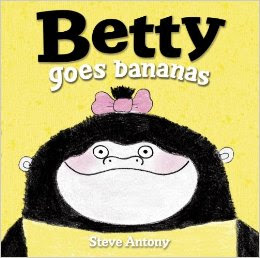


Betty Goes Bananas
Steve Anthony
Frustration, Tantrum
Betty loves bananas.  She just cannot seem to get it open, so she throws a huge frustrated tantrum!  Her friend toucan helps her.  Then, she gets mad because she wanted to do it by herself.  Can Betty learn how to control her frustration?


Clark the Shark
Bruce Hale/Guy Francis
Boisterous Behavior
Clark is rowdy.  He is enthusiastic about life—sometimes just a bit much for his friends and teacher.  With a little guidance and some self-control, he learns:  “There’s a time and place for everything” and “Sometimes you stay cool.


Mine!
Sue Heap
Selfishness, Siblings
Amy loves her blankie and toys.  When her siblings want to join in the fun, she responses selfishly with, “Mine!”  After seeing how sad her behavior makes her brothers, she decides to share.


Grumpy Pants
Claire Messer
Grumpy
Penguin is in a bad mood.  No matter what he does, he just can’t seem to shake it!  He learns some healthy ways to help him change his perspective.

Monday, July 16, 2012

Middle Grade Reader: Middle School the Worst Years of My Life


It is Marvelous Middle Grade Monday, hosted by Shannon Messenger.  I have seen James Patterson and Chris Tebbetts’ Middle School the Worst Years of My Life everywhere, from the Barnes and Nobles to Kroger to the library.   I had to read what it is all about…

Summary:
Rafe, a sixth grader, struggles with his peer relationships, his classes, and his home life.  His sole friend is Leo the Silent. The only thing Rafe finds fulfilling about middle school is figuring out how to break all the rules in the school handbook.  Home is anything but ideal.  His mother works all of the time to support the family while her “fiancĂ©” lies around watching TV and emptying the fridge.  Rafe, along with Leo, makes breaking all the school rules not only a goal, but a game.  His “accomplishments” temporarily make him feel successful, but his failing grades and strained relationship with his mom make him feel sad and worthless.  Rafe is desperately trying to figure out how he fits into the world.   Unfortunately, he is drawing A LOT of negative attention to himself in the process.   

Evaluation:
The Good…The journal format is VERY popular right now.  The protagonist has an amazing imagination and artistic gift. The creative drawings, interesting plot elements, and the engaging narrative voice make it a big draw for middle grade readers, especially reluctant ones.  I was drawn in right away and highly motivated to keep reading.  

The Bad…In much of the narrative, Rafe is making poor choices, like bullying a bully, breaking school rules, lying to his mother, stealing from others, and ignoring his class assignments. 

The Conflicting…There are a few things that I felt conflicted by as I read.  [SPOILER] Several pages into the novel, Rafe reveals that his best friend is not a person.  He is an imaginary friend.  This element seemed off to me.  Rafe is not six.  He is in sixth grade!  At the end of the novel though, his origin is revealed, which makes his function in the book more meaningful and understandable. Also, I was really creeped out by the fiancĂ© (referred to as “Bear”) living with the family.  He is mean to the children, treats the mother poorly, and does not even earn his keep.  Even though the children hate him (and for good reason), the mother allows him to be their primary guardian since she is working most of the time.  The situation made me feel uneasy.  Finally, as an adult reader, I could see that Rafe is acting out as a result of his home life and his lack of self-identity.  Part of the self-identity crisis is that Rafe is a non-traditional, but gifted student.  Fortunately, he has a teacher who recognizes the situation and works to help him.  While I could see that Rafe's mischief is a cry for help, I wonder if middle grade readers will pick up on it or if they will see the narrative as a glorification of defiance and irreverence.  


As a parent and an educator, I recommend  Middle School the Worst Years of My Life  with some reservation.  I realize there are children out there like Rafe or those who have experienced many of the same situations/choices.  As a result, it is relevant to reflect it as a slice of life.  On the other hand, I do have great concern about the growing atmosphere of disrespect that all forms of media are fostering in young people with little guidance or consequences.  Many young readers will enjoy the voice, style, and plot.  The book could definitely be used as a discussion platform about bullying, poor choices, consequences, family relationships, and many other relevant areas.  

Thursday, April 26, 2012

Middle Grade Fiction: 11 Birthdays (Wendy Mass)

Summary of 11 Birthdays (by Wendy Mass):
Ever think about what it would be like to relive your birthday, every day?  Experience what it might be like with 11 Birthdays.  

Amanda and Leo are born on the same day in the same hospital.  With a little help from “fate,” their parents meet in the hospital and again on their first birthday, leading to a close connection between the two families.   Each year, Amanda and Leo grow in their friendship and look forward to celebrating their birthday together.    Everything changes when Amanda overhears Leo saying unkind things about her to a group of boys at their 10th birthday party.  So begins an “infamous” silent wall between them...until their 11th birthday.  Amanda celebrates it without Leo.  When she goes to sleep that night, she is relieved it is all over.  Unfortunately, when she wakes up, her day begins EXACTLY like the day before.  At first, she thinks it is some kinds of joke, but when the bus arrives, she knows it isn’t.  Each morning after, she wakes up to find that it is still her 11th birthday!  Sound fun?  It isn’t.   Her  11th birthday is a disaster!  She has a miserable party without Leo, her mom gets fired, her dad is sick, she embarrasses herself at try outs, and her sister has her heart broken by a boy she likes.  After a few days, Leo reaches out to her.  He is stuck in this birthday rewind too!   The duo work together each day trying to figure out what to do to fix what went wrong the first day and to mend their friendship in the process.   They learn that the origin of the “curse” goes back to their great-great grandparents.  They must solve the mystery of that famous feud and put things right in their own lives before they can finally move forward.   

Evaluation:
Both Amanda and Leo are likable and relatable characters.  Each has fears and insecurities to overcome.  They grow in their relationship with each other and those around them.  Despite having the same day repeated, the children problem solve by using their previous experiences to change things—in most cases to make circumstances better, not only for themselves but others.   One day they skip school to live out an ideal type birthday since there are no real consequences.  While the day is mostly harmless fun, they do lie and sneak around. Another day is devoted to helping others they encounter.  Many of them are spent working to piece together what happened to their ancestors many, many years earlier in order to learn how to break the curse.  In the end, Amanda and Leo are close friends again, but they are unable to “fix” everything.  For instance, Amanda’s mother still loses her job and Kylie (Amanda’s sister) does not get the boy she seeks.  Nevertheless, the story ends with hope and optimism. 

I know there is no “perfect” book.  Kids have to do something “wrong” to have plot.  As a parent, I have a concern though.  Leo and Amanda lie…A LOT.  You may be able to argue that in some circumstances they have to.  If they tell the adults what is happening, no one will believe them.  (Amanda does try once to tell her dad with no success.)  There were other times though that they really did not have to lie for that reason.  Though Amanda expresses some guilt over lying, it does not stop them.  I do not believe the lying issue is a reason to prevent a child from reading it.  Instead, I bring it up as an opportunity for parents/teachers to discuss the issue with their children using questions like:
  • Is it ever okay to lie?  If so, when?
  • What are our family/school/class values on the subject of lying?
  • What are possible outcomes of lying?
  • Does this book illustrate “real” consequences for lying?
  • Who are some other people, real or fictional, who lied? What was their outcome?
Overall, 11 Birthdays is an entertaining read for ages 8-12.  The characters and plot will definitely engage young readers.  It also offers a perfect opportunity to discuss a significant moral issue.


Saturday, April 7, 2012

Middle Grade Reader: Zoe the Fearless (by Joachim Masannek)

Summary of Zoe the Fearless (by Joachim Masannek)
Zoe longs to shed her frilly girl soccer team to play “real” soccer with the boys.  Just as she gets an offer from the boys’ team to play, her father moves the family across the country.  Zoe deals with conflicting feelings about the move, the affects of her mother’s recent passing, and her dreams of playing pro soccer.   When Zoe gets the opportunity to try out for an all boys soccer team—the Wild Soccer Bunch—in her new town, she is thrilled.  When her try out is sabotaged by the girl-biased boys on the team, she is discouraged and angry.  Her father and grandmother help her come up with a plan for a rematch with the Wild Soccer Bunch boys.  Zoe learns some valuable lessons about fear, friendship, and family.


Evaluation
Zoe the Fearless is the third book in the popular The Wild Soccer Bunch series (see review of books #2 Diego the Tornado).  Zoe defies traditional gender roles.  She loves to dress in soccer jerseys and athletic shoes.  She longs to play rough and tumble soccer with the boys.  Her big dream is to be a professional athlete.  Her grandmother tries to coerce her into femininity but to no avail.   Not only does Zoe have to counter the rigid expectations her grandmother has for her behavior, she has to grapple with gender-bias from the boys her age.  The Wild Soccer Bunch is convinced she cannot keep up with them because she is a girl.  Later, another group of boys bullies her for her boyish clothes while trying to force her to kiss one of them.  Author Joachim Masannek captures in the small microcosm of Zoe's world the prejudices and harassment that young girls often face. Zoe, with some guidance from her family, navigates through the tumultuous waters of pre-adolescence with courage and dignity.

Zoe is a bit rough around the edges as the novel opens.  She comes across arrogant, sassy, and stubborn.  The circumstances of her story prompt her to become more humble, teachable, and caring.  One of the best lessons of the book is Zoe's realization that revenge can be sweet, but it is lonely.  People and friendship are far more important than showing off or winning.  

Unlike so many children's books, this series has parents/adults who are primarily depicted as involved and caring.  Even though they often help positively influence the choices of the characters, their role is not obtrusive.  The focus is on the children making choices and interacting with their peers.  The reader walks away with the sense that adults can be trusted and helpful.  

Zoe the Fearless will no doubt appeal to young readers (and especially soccer fans)--both boys and girls.  There is lots of thrilling action for the tween reader along with some worthwhile moments highlighting interpersonal relationships and overcoming obstacles.  The big print, line spacing, short chapters, and sporadic pictures make the book ideal for reluctant readers who get overwhelmed with many chapter books.  I recommend Zoe the Fearless for ages 8-12.  

This post is linking up with Marvelous Middle Grade Monday at Ramblings of a Wanna Be Scribe.  

Disclaimer: As per FTC guidelines, I received a copy of Zoe the Fearless from the publishers in exchange for my honest review. I received no monetary compensation. All opinions expressed here are mine and mine alone.

Wednesday, March 16, 2011

Picture Book: Mean Soup by Betsey Everitt


Summary of Mean Soup
Horace has had a bad day at school.  He is so frustrated when he arrives home that he stomps on a flower.  When his mother greets him, he hisses and growls.   His mother acts silly to cheer him up, and she suggests they make some soup together.   After filling a pot with water, she fancifully throws some salt in.   Then, she adds the ingredients!  Taking a deep breath, she screams into the pot.  She tells Horace, “Your turn.”  He stands on a stool and screams too.  His mother screams louder, and Horace growls and bares his teeth.  As the water starts to boil, they repeatedly stick out their tongues.  Horace bangs on the pot with a spoon and breaths his best dragon breath.  Finally, they both smile.   Horace wants to know the name of the recipe.  His mother reveals it is called, “Mean Soup.”  Side by side, they stir the bad day away.   

Evaluation:
The whimsical illustrations add to the tone and the characterization in Mean Soup (by Betsy Everitt). Horace’s feelings of embarrassment and anxiety are depicted as well as the mother’s free-spirited and quirky response.  For instance, she puts spoons up by her ears and dances around as Horace angrily lies on the ground. The simple text portrays a common childhood struggle of dealing with emotions. I have a child who sometimes gets emotionally worked up like Horace.  I appreciate how the mother finds a creative and positive way to deal with her son’s emotions.  Sometimes children are too worked up to talk about their feelings or to reason with.  I was inspired by Mean Soup to come up with imaginative ways to help my children when they are feeling frustrated or angry.  Use this book as a springboard to talk to your children (or students) about ways to deal with intense emotions or to brainstorm ways you can help your children when they are having a rough day.  Chances are, they can help you come up with a recipe for your own "Mean Soup."

A Better Way to Teach Theme: Why I Built the Jory John Now Prove It Series

If you’ve ever taught theme, you know the moment. Students finish a story, you ask “What’s the theme?” — and suddenly you’re flooded with a...