Showing posts with label frogs. Show all posts

Wednesday, February 29, 2012

Picture Book (Science): Animalogy, Animal Analogies (by Marianne Berkes)

Animalogy is not your traditional book about animals.  Instead, author Marianne Berkes compares and contrasts various creatures from insects to mammals using analogies.   Behaviors, sounds, body parts, and classifications are just some of the comparisons made between creatures that on the surface appear to have no connection.  Here is a sample:  

Robin is to wing, as goldfish is to fin.
Beaver is to build, as spider is to spin.

Youngsters have the opportunity to discover the connections within the analogies and to practice creating their own using similar patterns.  In addition, each pair (as exemplified above) of analogies ends in rhyme.  Children can identify the rhyming words and brainstorm other related ones. 

CathyMorrison, illustrator, depicts her subjects in minute detail—whether it is the fins on a goldfish or the hairs on a spider’s legs.  Every living thing is beautifully portrayed in its natural habitat.  Readers catch a glimpse of the African savannah, rocky mountain terrain, dense forests, and much more!   Each page and comparison is a starting point for lively discussion and interaction between adult readers and child listeners. 

I recommend Animalogy for ages 4-9.  It is a excellent resource for teachers and parents.  For additional resources to extend student learning, visit the Sylvan Dell website for a FREE full-color 48-page color teaching guide full of exciting and educational ideas.


This post is linked up with Enchanted Thursday blog hop at Enchanted Homeschooling.  


Sunday, March 20, 2011

Picture Books: The Rainforest

Children’s imaginations are sure to soar as they discover and explore the rainforest. We’re Roaming in the Rainforest: An Amazon Adventure and The Rainforest Grew All Around are two remarkable picture books to use in your study of this extraordinary habitat.  


As the sun rises, three children trek through the colorful and lively rainforest, discovering amazing creatures of all kinds.  Written in playful poetic verse, rainforest animal habitats and behaviors are revealed.  For example:

“Fly,” squawk the parrots,
from branches and twigs.
“We’ll swoop down to breakfast
on ripe, juicy figs.” 

The illustrations (by Anne Wilson) are vivid and energetic.  Butterflies are fluttering in search of nectar.   Leaf-cutter ants are on parade.  Monkeys swing in the branches.  Other pictures depict a quieter side of the rainforest.  Sloths are yawning and dozing on trees.  A jaguar stalks its prey.  Otters cuddle together as they fall asleep.  As the day comes to a close, the children leave the lulling sounds of the night.  We’re Roaming in the Rainforest offers a sweeping look at a day in this mysterious and irreplaceable habitat.  Children will become familiar with many of the creatures that dwell there which include birds, insects, mammals, reptiles, and amphibians.  The concluding pages include a wealth of information about the Amazon Rainforest, the native people, conservation, and creatures. 


The Rainforest Grew All Around (ages 4-9) by Susan K. Mitchell 
Using a clever adaption of the song “The Green Grass Grows All Around,” children learn about the rainforest from the floor to the canopy.  It begins with a seed of a Kapok tree which grows to become an essential habitat for many creatures—jaguar, emerald tree snake, leaf-cutter ants, sloth, poison dart frogs, toucans, bats, and many insects.  The poetic song is cumulative with a repeating stanza for choral reading: 

And by the snake
there crawled an ant…
the busiest ant
that you ever did see.

the ant by the snake,
and the snake by the vine,
and the vine near the cat,
and the cat in the tree,
and the tree from the seed,
and the seed in the ground,

and the rainforest grew
all around, all around;
the rainforest grew all around.

The wondrous world of the rainforest is depicted in the brilliant illustrations (by Connie McLennan).  Each page spread also has a side bar with fascinating facts about the plants, animals, and insects highlighted in the book.  The end pages provide activities, including a cookie recipe with many ingredients that come from the rainforest.  As always, Sylvan Dell provides an extensive across-the-curriculum teaching guide and other resources at their website to accompany your study and assist you in your lesson planning. 


Thursday, February 10, 2011

Science: Picture Books to Teach about Animals and Hibernation

In my research for books about snow day experiences, I came across Under the Snow by Melissa Stewart. This book does not fit my previous topic, but it is perfect for another related one:  hibernation.  After some research on this new topic, I have some great finds to accompany formal or informal instruction.  Here is a list of some picture books to include in your study of animals and/or hibernation.


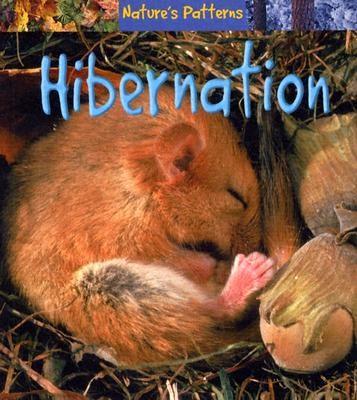
Hibernation (ages 5-10) by Anita Ganeri  (non-fiction) 
Hibernation offers stunning hibernating photographs of various animals—dormouse, woodchuck, bats, snakes, toadfish, turtle, and more.  Beginning with a definition, hibernation is discussed as a pattern or cycle.  The lives and habits of animals preparing for, experiencing, and coming out of hibernation are covered in an easy narrative text.  General facts are presented as well as specific ones about unique animals.  Key words are bolded and highlighted, such as burrow, energy, nurse, pattern, and temperature.  Hibernation is an excellent resource for instruction. 


Under the Snow (ages 5-10) by Melissa Stewart (realistic fiction)  
On a snowy afternoon, a young family trudges through the snow, ready to sled and to skate.  As they are enjoying their winter wonderland, the lives of hibernating animals are revealed.  The crevice of an old stone wall offers a place for ladybugs to huddle together and a snake to curl up to sleep.  Near the wall, a vole digs tunnels through the snow and under the ground nearby a chipmunk is seen snoozing in his burrow of leaves and grass.    As they move into the forest, other hideouts are illuminated—a butterfly in a pile of brush, some insects in a rotting log, and a frog in a pile of leaves.   Underground, a spotted salamander and a woodchuck wait out the cold months.  Finally, animals in and around the pond are seen hibernating or resting, like bluegills, carp, a frog, and a turtle.   Time’s passage is illustrated as spring returns.  Hibernating animals begin to emerge.  Beautiful text and vivid illustrations make Under the Snow essential to any study of hibernation.

Other Worthy Titles:
Every Autumn Comes the Bear (ages 3-7) by Jim Arnosky (realistic fiction) 
A bear returns to the same place each year.  As he makes his way to his den, he observes other animals preparing for the winter weather.

Bedtime for Bear (ages 3-8) by Brett Helquist (fantasy fiction)   As Bear settles down for his long winter’s nap, his two raccoon friends goad him outdoors to play in the snow.  Bear experiences a day of fun in the snow before finally going to sleep for the winter. 

Tuesday, November 30, 2010

Concept Books: Counting to Ten and Back Again

Children will be delighted with this enchanted counting book!  A little girl falls asleep with her fairy tale story book.  She dreams of frog princes, the ugly duckling, gingerbread men, magic beans, and many others captivating images. After counting to ten and back again with these fairy tale inspirations, the little girl wakes up.  Children will enjoy identifying the fairy tale reference in each picture.  Teaching Opportunities:  Counting, Numerals, Number Words, Alliteration, Fairy Tales


One Naked Baby  by Maggie Smith  
One naked baby comes running out of the bathroom, ready to start his day!  As he gets dressed to go outside, many things are observed in his surroundings, such as two fat cats, three laundry baskets, and four silly hats.  After his snack, he heads outside to observe nine stepping stones, eight robins, seven worms, and much more!  After getting muddy in the backyard, he ends up back inside, ready for another bath!  Teaching Opportunities:  Counting, Number Words, Numerals, Daily Routine, Weather, Nature, Backyard, Rhyme, Alliteration, Bathtime


One Frog Sang by Shirley Parenteau  
This wonderfully illustrated book is sure to please.  Counting 1-10, various types of frog are depicted in typical spring time behavior and singing their diverse calls.   Then, they hear a car splashing down the wet road.  Counting backwards, the frogs are shown hiding each in a different way.  Until, one frog leaps on the high garden wall and begins to sing again.  Teaching Opportunities:  Counting, Number Words, Frogs, Amphibians, Spring, Alliteration, Onomatopoeia, Habitats


Raindrop Plop!  by Wendy Cheyette Lewison   
Entertaining rhyming couplets and lively illustrations capture the fun that an unexpected rainstorm can be on a summer day.  A little girl counts and sings as the raindrops begin to fall.   When she gets inside, the counting moves from ten to one as she takes a bath, dresses, drinks hot cocoa, and watches the animals outside.  Teaching Opportunities:  Counting (backward and forward), Number Words, Rhyme, Onomatopoeia, Weather, Bathtime


Ten Dirty Pigs/Ten Clean Pigs  by Carol Roth 
One by one dirty pigs get into the tub where they scrub, rinse, splash, and brush.  Flip over the book.  The pigs get out of the tub where they dry off, dress, and go out.  Then, they get dirty all over again.  Teaching Opportunities:  Counting, Number Words, Personal Grooming, Bathtime, Rhyming Words, Alliteration, Poetry

A Better Way to Teach Theme: Why I Built the Jory John Now Prove It Series

If you’ve ever taught theme, you know the moment. Students finish a story, you ask “What’s the theme?” — and suddenly you’re flooded with a...