Showing posts with label hibernation. Show all posts

Sunday, May 13, 2012

Picture Book (Science): Hornets, Incredible Insect Architects (Markle)

Two weeks ago, I highlighted Sandra Markle’s captivating book Luna Moths: Masters of Change.   Hornets: Incredible Insect Architects is another book in her amazing 8-part Insect World series.   

Summary:

Before delving into the specifics on hornets, the book begins with a concise overview of what makes insects unique from other living things.  Next, the difference between hornets and wasps is explained, making it clear that even though these terms are often used interchangeably, they are two very different species.  Interestingly, there is only one type of hornet in America.  Originating in Europe, they were first found in New York in 1840. They have since spread out through much of the country. 


The parts of the body—inside and out—are covered extensively with diagrams and text boxes identifying each part and explaining its use.  Then, the life cycle is described as it moves from egg, to larva, to pupa, and, eventually, to adult.  One particularly interesting fact is that the larva “clamour” for food—often in unison!   The focal point is the building and tending of the nest.  The queen chooses the building site and starts the design. The most amazing part is how she combines wood fibers with her saliva and juices to make paper!  In addition, she forms each small cell into a perfect hexagon, making it ready for a single egg. Hornets prey on honeybees for food.  They bite off the head and abdomen to eat the protein-filled thorax.  Further information is laid out about the functions and continued building within the nest, ending with the winter coming.  The queen dutifully sets everything up for a next crop of queens for the following spring season.  The book concludes with information about other insect architects, glossary of key scientific terms, book and website resources, and hornet activities.  

Evaluation:  

This series goes beyond most juvenile science books, but the information is not so dense that is becomes cumbersome.  Markle's writing style is highly engaging.  I found myself learning a lot and not wanting to put the book down!  Stunning photographs accompany each section of information to provide an up-close look at the lives of these remarkable insects.  I will continue to seek out additional books in the series as well as Markles other books.  I recommend Hornets: Incredible Insect Architects for ages 7 and up.  Independent reading level is about third-grade.


This post is linked up with Science Sunday at Adventures of Mommydom.  
  

Sunday, February 27, 2011

Picture Book: Hugless Douglas by David Melling


Summary of Hugless Douglas:
Douglas, a young brown bear, wakes up one spring morning.   His first thought is, “I need a hug.”    Douglas proposes that the best hugs are big.  He finds the biggest object around, and he hugs it.  It is a rock, though, so it does not feel right.  Instead, it is heavy and hard.   Next, he decides that the best hugs are tall.   The tallest thing he sees is a tree.  No matter where he hugs it—top, middle, and bottom—he only gets splinters rather than returned affection.  Douglas does not give up!    He resolves that the best hugs are comfy, but the “comfy” bush he embraces quivers, trembles, and flees.   He finds some sheep hiding in it.  They won’t hug him either!  After a couple more failed attempts, a forest friend leads him to a deep dark cave.  Inside, he finally find the perfect hug…from him mommy!   Douglas realizes the best hugs are from someone he loves.   He snuggles into the “biggest, warmest arms he knew.” 

Evaluation:
One of the best parts of this book is the illustrations by David Melling.   Much of the character, action, and humor are found in the pictures and in the darling character he has created.   The text is enjoyable and sweet.   Hugless Douglas is one of those books you want in your home or class library because children are going to ask to listen to it over and over.   Check out other beloved books by Tiger Tales.

Teaching Suggestions:

  • Add Hugless Douglas to a unit on spring, bears, or hibernation.
  • Print the events on cards; students (in groups or individually) can practice putting them in sequential order.
  • Draw a pictorial time line of the main events in sequence.
  • Challenge the students to think about what the other characters in the story feel;  list adjectives on the board that the students brainstorm.
  • Discuss other adjectives in the story like tall, big, comfy; then brainstorm synonyms and antonyms for each one.
  • Consider what Douglas may do next in the narrative and what he might eat now that he is awake from his long winter’s nap.

Thursday, February 10, 2011

Science: Picture Books to Teach about Animals and Hibernation

In my research for books about snow day experiences, I came across Under the Snow by Melissa Stewart. This book does not fit my previous topic, but it is perfect for another related one:  hibernation.  After some research on this new topic, I have some great finds to accompany formal or informal instruction.  Here is a list of some picture books to include in your study of animals and/or hibernation.


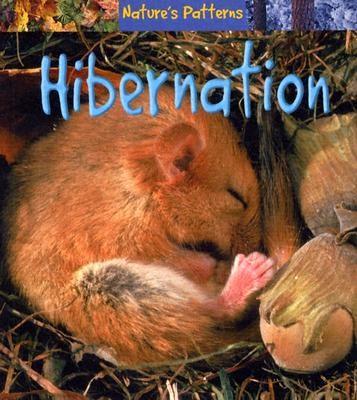
Hibernation (ages 5-10) by Anita Ganeri  (non-fiction) 
Hibernation offers stunning hibernating photographs of various animals—dormouse, woodchuck, bats, snakes, toadfish, turtle, and more.  Beginning with a definition, hibernation is discussed as a pattern or cycle.  The lives and habits of animals preparing for, experiencing, and coming out of hibernation are covered in an easy narrative text.  General facts are presented as well as specific ones about unique animals.  Key words are bolded and highlighted, such as burrow, energy, nurse, pattern, and temperature.  Hibernation is an excellent resource for instruction. 


Under the Snow (ages 5-10) by Melissa Stewart (realistic fiction)  
On a snowy afternoon, a young family trudges through the snow, ready to sled and to skate.  As they are enjoying their winter wonderland, the lives of hibernating animals are revealed.  The crevice of an old stone wall offers a place for ladybugs to huddle together and a snake to curl up to sleep.  Near the wall, a vole digs tunnels through the snow and under the ground nearby a chipmunk is seen snoozing in his burrow of leaves and grass.    As they move into the forest, other hideouts are illuminated—a butterfly in a pile of brush, some insects in a rotting log, and a frog in a pile of leaves.   Underground, a spotted salamander and a woodchuck wait out the cold months.  Finally, animals in and around the pond are seen hibernating or resting, like bluegills, carp, a frog, and a turtle.   Time’s passage is illustrated as spring returns.  Hibernating animals begin to emerge.  Beautiful text and vivid illustrations make Under the Snow essential to any study of hibernation.

Other Worthy Titles:
Every Autumn Comes the Bear (ages 3-7) by Jim Arnosky (realistic fiction) 
A bear returns to the same place each year.  As he makes his way to his den, he observes other animals preparing for the winter weather.

Bedtime for Bear (ages 3-8) by Brett Helquist (fantasy fiction)   As Bear settles down for his long winter’s nap, his two raccoon friends goad him outdoors to play in the snow.  Bear experiences a day of fun in the snow before finally going to sleep for the winter. 

Sunday, October 10, 2010

Bear Snores On (and other titles) by Karma Wilson


I have a new favorite author:  Karma Wilson!  I picked up a book called Bear Feels Sick (ages 4-9) at the library, and I instantly fell in love with the characters. A group of small woodland animals (which includes a hare, a gopher, a mole, and a couple birds) loving nurse an enormous but kind-hearted bear back to health.  Each character is compassionate and considerate.  Bear finally gets well, but now, his friends are all ill.  He is seen taking care of them.  There is a charming and warm relationship between the animals. 
Well, naturally, when I went back to the library, I searched for other books by the same author.  There is a whole series of Bear books!   Alex reminded me that we read one of them, Bear Feels Scared, already.  This book has a similar plot formula:  Bear gets lost and feels scared.  His small furry friends search for him, find him, and of course, comfort him.   As I discussed this book with Alex, I asked him why the author chose a bear to be scared.  He hit the nail on the head!  It is to show that everyone is scared sometimes, even big, strong bears! 
Next, we read two more stories:  Bear’s New Friend and Bear Snores On.  Both continue the motifs of friendship, kindness, sharing, compassion, and individual differences.    Other outstanding features of these books include beautiful illustrations by Jane Chapman as well as rhythmic and expressive language.  The repetitive lines (such as “Bear’s Not Scared”) invite student participation during reading.  They will not need much prompting to get involved with these stories because they are endearing and fun! 
Karma Wilson has a wonderful site that includes Features for Teachers, Parent’s Place, and Kid’s Corner.   In these areas of the site, you will find activities, coloring sheets, snack ideas, and crafts to go along with the books.   
I am excited about reading her other books too!  I have already checked some of them out of the library.  I will post information on some of my favorites.  Definitely, check this author out!  Her books are worth the cost for a classroom or home library!  Click on the title links anywhere in the blog or bibliography to go to Amazon to learn more and/or to purchase these titles. 
In my web search, here are some great links to go along with the books.  If you have any additional sites you think would be helpful, please email me.  

General Activities


Bear Feels Scared Activities


Bear Snores On Activities


Bear Feels Sick Activities

A Better Way to Teach Theme: Why I Built the Jory John Now Prove It Series

If you’ve ever taught theme, you know the moment. Students finish a story, you ask “What’s the theme?” — and suddenly you’re flooded with a...