Showing posts with label fish. Show all posts

Wednesday, February 29, 2012

Picture Book (Science): Animalogy, Animal Analogies (by Marianne Berkes)

Animalogy is not your traditional book about animals.  Instead, author Marianne Berkes compares and contrasts various creatures from insects to mammals using analogies.   Behaviors, sounds, body parts, and classifications are just some of the comparisons made between creatures that on the surface appear to have no connection.  Here is a sample:  

Robin is to wing, as goldfish is to fin.
Beaver is to build, as spider is to spin.

Youngsters have the opportunity to discover the connections within the analogies and to practice creating their own using similar patterns.  In addition, each pair (as exemplified above) of analogies ends in rhyme.  Children can identify the rhyming words and brainstorm other related ones. 

CathyMorrison, illustrator, depicts her subjects in minute detail—whether it is the fins on a goldfish or the hairs on a spider’s legs.  Every living thing is beautifully portrayed in its natural habitat.  Readers catch a glimpse of the African savannah, rocky mountain terrain, dense forests, and much more!   Each page and comparison is a starting point for lively discussion and interaction between adult readers and child listeners. 

I recommend Animalogy for ages 4-9.  It is a excellent resource for teachers and parents.  For additional resources to extend student learning, visit the Sylvan Dell website for a FREE full-color 48-page color teaching guide full of exciting and educational ideas.


This post is linked up with Enchanted Thursday blog hop at Enchanted Homeschooling.  


Monday, June 20, 2011

NonFiction Series: Animals with Super Powers (by Natalie Lunis)

Bearport Publishing has many stunning and informative non-fiction book series.   My first experience with their books was the Spectacular Animal Town series, a perfect collaboration of pictures and text.  Bearport has introduced several new series.   One of my favorites is Animals with Super Powers by author Natalie Lunis.  Two of the four vibrant books in the series are Electric Animals and See Through Animals.   

Electric Animals 

It might be shocking to learn that some animals have “super” powers.  In the case of these unique creatures, they are able to use electricity to survive.  They don’t even need an outlet!  The electric eel, electric catfish, electric ray, and stargazer send out shockwaves to stun or to kill their prey, making them powerless to these hungry carnivores.  The sleek knifefish, the great white shark, and the platypus use electricity in various ways to find food (similar to echolocation). The elephantnose fish uses electroreceptors to find food, to navigate through the water, and to communicate.  Which one has the strongest electric charge?  Which uses electricity to find a mate?  Which creatures are still a mystery to scientists?  Which animals uses electricity to keep predators away? Read Electric Animals to find out! 


These amazing creatures camouflage, but not like most others with this natural gift.  Nine animals use “invisibility” to help them survive.  They do not completely disappear, but their  transparency makes them virtually indistinguishable to potential predators.  For instance, most butterflies are renowned for their vivid colors.  The clearwing butterfly, though, has see-through wings that make it hard to spot whether it is in the air or on a flower.  Of the eight remaining see-through animals, only two live on the land:  the glass frog and the transparent frog.  The others make their homes in the sea—transparent anemone shrimp, transparent sea butterfly, jellyfish, glass squid, transparent octopus, and transparent zebrafish.  Transparency protects and provides for these creatures in various ways.   Fascinating mysteries abound in See-Through Animals.  


It is Non-Fiction Monday.  Check out other great non-fiction titles at Geo Librarian. 

Monday, April 4, 2011

Picture Book (Science): Ocean Seasons by Ron Hirschi

Summary of Ocean Seasons:  
Similar to the seasonal changes in plant and animal life on land, there are ones in the ocean as well.  The ocean bursts with color in the spring as sea plants stretch and multiple their foliage.  Like on the land, baby animals are born in the spring and summer when there is abundant food and optimal weather.  Plankton sparkles in the sunlight.  Marine life grows bigger and stronger in preparation for the colder months ahead.  As the autumn winds blow across the ocean, plankton begin to die.  Salmon trek back toward the fresh water where they swim upstream, driving many animals to their migration to hunt them. The winter prompts the humpback whale to swim to warmer waters until the spring weather returns.  Ocean Seasons is set in the Pacific Ocean, but it reflect comparable changes in oceans around the world. 

Evaluation:
Using a distinctive, seasonal format, author and biologist Ron Hirschi brings to light the habits and changes in the ocean, providing an excellent teaching occasion to draw parallels to seasonal changes on land. The dynamic, meticulous illustrations (by Kirsten Carlson) offer a glimpse into this mysterious underwater world from the salmon swimming upstream to the humpback whales leaping through the air.  Many other fascinating marine creatures and plants are introduced, such as puffins, urchins, plankton, and orcas.  In a natural, narrative approach marine food chains and habitats are also revealed.  The food web cards provided in the book allow children the chance to recreate the food chains to demonstrate and to increase their knowledge.  Ocean Seasons is ideal for children ages 4-8. 

Teaching Opportunities: 
Sylvan Dell has created a 24-page across the curriculum teaching guide as well as quizzes and other resources at their website. 

This post is part of the Non-Fiction Monday blog hop hosted by L.L. Owens.  Check out other non-fiction titles at her website. 

Thursday, February 10, 2011

Science: Picture Books to Teach about Animals and Hibernation

In my research for books about snow day experiences, I came across Under the Snow by Melissa Stewart. This book does not fit my previous topic, but it is perfect for another related one:  hibernation.  After some research on this new topic, I have some great finds to accompany formal or informal instruction.  Here is a list of some picture books to include in your study of animals and/or hibernation.


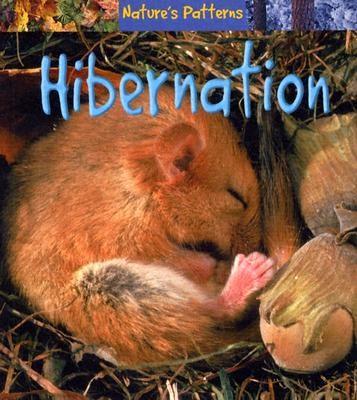
Hibernation (ages 5-10) by Anita Ganeri  (non-fiction) 
Hibernation offers stunning hibernating photographs of various animals—dormouse, woodchuck, bats, snakes, toadfish, turtle, and more.  Beginning with a definition, hibernation is discussed as a pattern or cycle.  The lives and habits of animals preparing for, experiencing, and coming out of hibernation are covered in an easy narrative text.  General facts are presented as well as specific ones about unique animals.  Key words are bolded and highlighted, such as burrow, energy, nurse, pattern, and temperature.  Hibernation is an excellent resource for instruction. 


Under the Snow (ages 5-10) by Melissa Stewart (realistic fiction)  
On a snowy afternoon, a young family trudges through the snow, ready to sled and to skate.  As they are enjoying their winter wonderland, the lives of hibernating animals are revealed.  The crevice of an old stone wall offers a place for ladybugs to huddle together and a snake to curl up to sleep.  Near the wall, a vole digs tunnels through the snow and under the ground nearby a chipmunk is seen snoozing in his burrow of leaves and grass.    As they move into the forest, other hideouts are illuminated—a butterfly in a pile of brush, some insects in a rotting log, and a frog in a pile of leaves.   Underground, a spotted salamander and a woodchuck wait out the cold months.  Finally, animals in and around the pond are seen hibernating or resting, like bluegills, carp, a frog, and a turtle.   Time’s passage is illustrated as spring returns.  Hibernating animals begin to emerge.  Beautiful text and vivid illustrations make Under the Snow essential to any study of hibernation.

Other Worthy Titles:
Every Autumn Comes the Bear (ages 3-7) by Jim Arnosky (realistic fiction) 
A bear returns to the same place each year.  As he makes his way to his den, he observes other animals preparing for the winter weather.

Bedtime for Bear (ages 3-8) by Brett Helquist (fantasy fiction)   As Bear settles down for his long winter’s nap, his two raccoon friends goad him outdoors to play in the snow.  Bear experiences a day of fun in the snow before finally going to sleep for the winter. 

Saturday, January 22, 2011

The Pout-Pout Fish and the Big-Big Dark (Deborah Diesen)

  
Story Summary:
In his second underwater adventure, Mr. Fish enthusiastically sets out to help Ms. Clam recover her missing pearl.   He dives through the water, searching the ocean floor closely inch by inch.  As he gets to a ledge, a hidden voice urges him to set out further to sea.   Mr. Fish swims a little deeper, but his heart goes “flit-flutter.”   Trying to muster up courage, he recites to himself this mantra:
I’m FAST as a sailfish.
I’m STRONG as a shark.
I’m SMART as a dolphin…
But I’m scared of the dark.

Deeper and deeper, he explores the ocean floor.  Each time he emerges on a new level, he is roused by a quiet whisper and his personal mantra.   As he finds himself face to face with his greatest fear—darkness, his bravery begins to wane.  The now familiar whisper (Miss Shimmer) asserts that he can do it!  She cheers him on with her own song:

Two are FASTER than a sailfish.
Two are STRONGER than a shark.
Two are SMARTER than a dolphin…
Two are BIGGER than the dark!

Together they swim deep into the darkness.   With a little light from Mr. Lantern, they locate Ms. Clam’s pearl and reward Mr. Lantern for helping them out.  The whole gang gathers around Ms. Clam to celebrate the finding of the pearl and the joy of friendship.   Together than affirm, “We are bigger. Yes. BIGGER. Always Big, Big, Bigger, than the dark!” 

Evaluation: 
The introduction in The Pout-Pout Fish post outlines my thoughts on the language, illustrations, and character.  There are several essential motifs that are worthy of exploring in The Pout-Pout Fish in the Big-Big Dark. The most obvious is the fear of the dark that many children (and adults J) experience.  Use this book as a spring board to discuss that fear (or any fear) and how Mr. Fish overcomes it (as well as other strategies for overcoming fears).  Also, this book is about keeping promises.  The protagonist perseveres despite his worries until he fulfills his vow.  Finally, it is a lesson in friendship.  Mr. Fish helps Ms. Clam.  Miss Shimmer and Mr. Lantern assist Mr. Fish.  A whole gang of friends come to celebrate the recovered pearl. 

Sunday, January 2, 2011

Science Trade Books: Animal Kingdoms


In 2010, Buffy Silverman published a valuable set of science books with the Lerner Publication Company.  There is a book for each group in the vertebrate animal kingdom:  amphibians, mammals, fish, birds, and reptiles.  The characteristics for each animal kingdom are defined along with information related to life cycles, habitats, survival, and  other fascinating facts.  Each page has 2-5 sentences of text which makes this series accessible to early elementary students for instruction or older elementary students to easily read independently.  In addition, each book includes a glossary of important science terms and suggestions for websites/books for further reading. 

One of the best aspects of this series is the stunning pictures.  Nearly every page has a large, vivid full-color picture of the animals being highlighted. 
Titles in the series include:
                          

Monday, November 22, 2010

Shark vs. Train by Chris Barton


Summary: 
Two boys race to a toy box.  One grabs a shark while the other snatches a train.  Thus, the competition begins!  Who will win?  It all depends on the task.  If it is in the ocean or in a hot air balloon, clearly the shark has the upper hand.  On railroad tracks or a seesaw, the train is an unmistakable winner.  The two go through various challenges, such as roasting marshmallows, bowling, shooting baskets, trick-or-treating, and running a lemonade stand.  There are other tasks that neither does well at like video games (no thumbs), a piano recital, or space travel.  Eventually, the boys are called for lunch, so they give up their competition and run off.

Why I Chose It: 
I picked up Shark vs. Train  because I thought my son would enjoy it (which he did).  Most boys (and many girls) love sharks and trains—two tough things.   I was also intrigued by the title.   I thought:  Why on earth would it be necessary for a shark and a train to compete?  As I read though, I realized the story is not about sharks and trains.  Instead, it is a metaphor for people.  We are all designed differently with a unique set of skills, talents, and gifts.    As a result, we do not need to compete with others because it is like sharks and trains competing:  pointless.  Instead, we should work to be our best for ourselves.  Second, it struck me how who “wins” the competition is based on the task.   The same goes for people.  We should not feel bad about ourselves if someone is better at a game, an academic subject, or a sport.  Everyone is made differently.  For instance, my daughter is an excellent artist while my son is a stellar mathematician.  I expect them to do their best at both skills, but I realize one will always have a better painting, and the other will always ace his math test. 

Final Evaluation: 
I think Shark vs. Train is a valuable object lesson for siblings and for friendships.  Let’s celebrate how we are fearfully and wonderfully made--rather than be jealous of how someone else is made “better.”    Check out the author's activity guide for this book. 

A Better Way to Teach Theme: Why I Built the Jory John Now Prove It Series

If you’ve ever taught theme, you know the moment. Students finish a story, you ask “What’s the theme?” — and suddenly you’re flooded with a...