Showing posts with label weather. Show all posts

Tuesday, May 31, 2016

Raindrops Roll (April Pulley Sayre)


Photographer/Illustrator:  April Pulley Sayre

Target Ages:  5 and up

First Lines:  “Rain is coming.  Can you feel it in the air?”

Summary:  Beginning with the darkening of the sky and ending with a drying of the drops, the mystery and beauty of a rainstorm is explored. 

Evaluation:  Sayre gives readers a window into the world of insects, plants, and other creatures as they experience a rainstorm.  The vivid and stunning photographs capture the marvel of it all.  For instance, images depict insects like a firefly, a grasshopper, and a fly taking cover while the rain thuds down and washes all the plants and animals. 

Raindrops are shown up close globbing together on a daisy, clinging to the curves of a web, magnifying the surface of a plant, and reflecting the wonders of nature.  Each photograph is a sight to behold.  You will want to look at them each, again and again. 

Raindrops Roll illustrates a part of the water cycle—precipitation and, briefly, evaporation.  Many books cover this topic.  Sayre takes it to another level by showing in minute detail how the natural world experiences the rain and its aftermath. 

In the “Splash of Science” section at the end, readers will learn more about the science of the water cycle and raindrops.  I highly recommend Raindrops Roll, which encourages inquiry and wonder about this amazing world.


Activities and Extension Ideas for Lesson Plans:
  • Preparation for a Storm:  Before reading, discuss how people prepare when they know there will be a storm.  Ask:  How do you think insects and animals might prepare?  Most kids have probably not thought about that question.
  • Predicting Weather: Talk about the smells, sights, sounds, and the feel of the air the next time a storm is moving into to your area.  Ask:  How do people know a storm is coming (other than from a weather report)?  This activity helps kids observe the world around them and see patterns.  For older kids, you can also discuss how meteorologists predict weather and storms.
  • Experiencing the Rain: Take kids out during a warm spring/summer rain (with no thunder and lightning, of course).  Allow them to have fun playing in the rain.  Then take some time to observe what is happening in nature.
  • Post Rain: Walk around a park, playground, yard, or the woods after a rainstorm. See how many of the sights from the book you can find as well as some of your own. If possible, take photographs together. You can also bring a sketchbook to draw pictures or a journal to write down observations.
  • Writing:  Compose a poem or story about your rain exploration experience. 
  • Weather:  Check out other books in the library about the weather or the water cycle.  I love Water Can Be by Laura Purdie Salas.


Monday, January 21, 2013

NonFiction Monday: The Story of Snow (by Mark Cassino & Jon Nelson)

We are in the month of January, the middle of winter.  We had our first little bit of snow last week, so this NonFiction Monday selection is the perfect tie in for many teachers and parents around the country. 

The Story of Snow: The Science of Winter’s Wonder (by Mark Cassino with Jon Nelson):
Part narrative, part science lesson Cassino and Nelson reveal the secret life of a snow flake.  I say “secret” because it is largely microscopic.  The story commences on “a winter day, high up in the sky, in a cloud that is very, very cold.”  Interestingly, snow begins with a speck—but not of water.  These specks are much smaller than the eye can see.  They are common things like sea salt, plant pollen, volcanic soot, and, even, leave bacteria that float high in the sky from the winds below.  This speck becomes the center of the snow crystal.  Drawings help depict the process the flake goes through until it is fully “born.”  The authors’ provide close up pictures of snowflakes to illustrate their text on the types (stars, plates, or columns) and variations (twins, rimes, and clumps).  The book concludes with instructions and tips for catching and observing snowflakes. 

Evaluation:
The Story of Snow: The Science of Winter’s Wonder is a fascinating read!  A vast majority of the information in the book was new to me.  Cassino and Nelson do well to explain the concepts in a way that is relatable to people of all ages.  The close up shots of the various glittery and graceful snowflakes are spectacular.  Best of all, the book encourages children’s own scientific exploration of nature and the world around them.  I recommend this book for ages 7 and up. 

Visit The LibrariYAn for more wonderful non-fiction recommendations from around the blog-o-sphere.


Wednesday, February 22, 2012

Picture Book (Science): Prairie Storms (by Darcy Pattison)


Summary of Prairie Storms (by Darcy Pattison):  
The prairie grasslands are explored in this ecosystem adventure.   Month by month the various seasonal storms and other weather conditions are depicted and accompanied by expressive lines.  Here is an excerpt: 

"Rain and rain and rain and--it's a flashflood!  Walls of water crash through the prairie dog town.  Deep in the muddy burrows, prairie dog families hunker, safe in pockets of air--until the waters go down."

Readers get a glimpse of the lives of a number of prairie animals, such as prairie chickens, ground hogs, prairie dogs, red foxes, cougars, bald eagles, bison, burrowing owls, and lesser earless lizards.  This celebration of the American grassland habitat is sure to leave an impression. 

Evaluation:

As with all of Sylvan Dell’s amazing titles, Prairie Storms incorporates a mixture of science and language enrichment opportunities.  The striking illustrations (by Kathleen Rietz) are spring boards for discussing the attributes of both the seasons and the diverse weather portrayals.  Each two-page spread is labeled with the month for opportunities to discuss the spelling, which season it belongs to, and typical weather during that time.  There is a nice mix of more commonly known animals with lesser known ones, allowing vocabulary and visual recognition skills to be expanded.  The lyrical lines are well-written and appealing.  I recommend this book for ages 4-8.  


Teaching Opportunities:
Sylvan Dell has developed a FREE 52-page across the curriculum teaching guide to help you with some of teaching ideas above and many more in areas like geography, science, language-arts, and math.  The book page also includes various quizzes and other resources. 

Thursday, February 10, 2011

Science: Picture Books to Teach about Animals and Hibernation

In my research for books about snow day experiences, I came across Under the Snow by Melissa Stewart. This book does not fit my previous topic, but it is perfect for another related one:  hibernation.  After some research on this new topic, I have some great finds to accompany formal or informal instruction.  Here is a list of some picture books to include in your study of animals and/or hibernation.


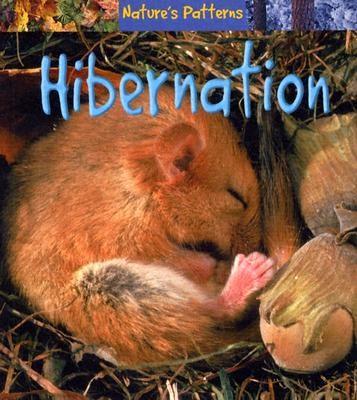
Hibernation (ages 5-10) by Anita Ganeri  (non-fiction) 
Hibernation offers stunning hibernating photographs of various animals—dormouse, woodchuck, bats, snakes, toadfish, turtle, and more.  Beginning with a definition, hibernation is discussed as a pattern or cycle.  The lives and habits of animals preparing for, experiencing, and coming out of hibernation are covered in an easy narrative text.  General facts are presented as well as specific ones about unique animals.  Key words are bolded and highlighted, such as burrow, energy, nurse, pattern, and temperature.  Hibernation is an excellent resource for instruction. 


Under the Snow (ages 5-10) by Melissa Stewart (realistic fiction)  
On a snowy afternoon, a young family trudges through the snow, ready to sled and to skate.  As they are enjoying their winter wonderland, the lives of hibernating animals are revealed.  The crevice of an old stone wall offers a place for ladybugs to huddle together and a snake to curl up to sleep.  Near the wall, a vole digs tunnels through the snow and under the ground nearby a chipmunk is seen snoozing in his burrow of leaves and grass.    As they move into the forest, other hideouts are illuminated—a butterfly in a pile of brush, some insects in a rotting log, and a frog in a pile of leaves.   Underground, a spotted salamander and a woodchuck wait out the cold months.  Finally, animals in and around the pond are seen hibernating or resting, like bluegills, carp, a frog, and a turtle.   Time’s passage is illustrated as spring returns.  Hibernating animals begin to emerge.  Beautiful text and vivid illustrations make Under the Snow essential to any study of hibernation.

Other Worthy Titles:
Every Autumn Comes the Bear (ages 3-7) by Jim Arnosky (realistic fiction) 
A bear returns to the same place each year.  As he makes his way to his den, he observes other animals preparing for the winter weather.

Bedtime for Bear (ages 3-8) by Brett Helquist (fantasy fiction)   As Bear settles down for his long winter’s nap, his two raccoon friends goad him outdoors to play in the snow.  Bear experiences a day of fun in the snow before finally going to sleep for the winter. 

Tuesday, November 30, 2010

Picture Books: Counting Down to Christmas

These Christmas tales use counting as a platform to tell about holiday traditions.  While they are useful for teaching or reinforcing counting skills, these books are entertaining and enduring in their own right.  Each book illustrates tradition, holiday spirit, and family memories. 


 Counting Christmas (ages 3-6) by Karen Katz  
Three children count down to Christmas Day.  In preparation, they wrap the tree with lights, put out the presents, make cookies for Santa, hang their stockings, and race upstairs.  Once the parents lovingly put them to bed, the children dream of Christmas goodies and gifts.   On Christmas morning they joyfully play with their toys and family.   Teaching Opportunities:  Counting, Numerals, Number Words, Ryhme, Alliteration, Traditions


Christmas for 10 (ages 3-8) by Cathryn Falwell  
A simple counting format frames the festivities of a loving family preparing for Christmas.  The family decorates their tree, plays music, listens to stories, wraps presents, bakes cookies, and strings popcorn.  In addition, they pack baskets for the needy and cheerfully welcome guests.  Christmas for 10 illustrates children, parents, and grandparents making holiday memories together.  Teaching Opportunities:  Counting (backward & forward), Numerals, Family, Traditions


The 12 Days of Christmas (ages 3-8) by Linnea Asplind Riley 
This cumulative picture book illustrates the popular Christmas song by the same name.  It is the story of a young man who gives his true love many unusual gifts, such as two turtle doves, three French hens, four colly birds, and five golden rings.  The vibrant paper cut-out illustrations are appealing.  Teaching Opportunities:  Counting, Numerals, Ordinal Numbers, Vocabulary Building, Music


Ten Little Christmas Presents (ages 4-8) by Jean Marzollo 

Ten presents are sitting in the snow, labeled with an animal's name.  Each two-page spread illustrates an animal with his Christmas present and the number of presents left along with rhyming text.  For instance, "Ten little Christmas presents, in the snow so fine...Mouse gets earmuffs!  Now there are nine."  The pattern continues as each new present is opened.  After all the presents have been revealed, they ask, "Who's our Secret Santa?"  Then, Santa Bear slides down the hill and wishes everyone a merry Christmas.  Teaching Opportunities:  Counting, Numerals, Forest Animals, Vocabulary, Rhyme, Generosity

Under the Star (ages 4-10) by Jane Yolen 
Each two page spread repeats the words, "Under the star, Under the star" on the left. Then, in ascending order (1-10) a countdown of people and animals who would have seen the Star of David on the night Jesus was born are called out.  The final picture is of all the people and animals gathered around Mary, Joseph, and Jesus in the manger.  Teaching Opportunities:  Counting, Number Words, Numerals, Christmas, Bible Story


Snowbear’s Christmas Countdown (ages 5-10) by Theresa Smythe  
On the first day of December, Snowbear starts to prepare for Christmas.  Each day he fulfills one of his holiday traditions.  Snowbear writes out his Christmas cards, makes ornaments, picks out a tree, goes shopping, and wraps his presents.  In addition, he enjoys the winter weather by sledding and ice skating.  On Christmas Eve, Snowbear bakes cookies for Santa and his reindeer.  Readers will enjoy this countdown to Christmas (1-25).  Teaching Opportunities:  Counting, Ordinal Numbers, Weather, Traditions, Bears


Counting to Christmas (ages 4-8) by Nancy Tafuri  
Similar to Snowbear’s Christmas Countdown, a young girl counts down day by day.  Every couple of days she participates in a different activity, such as sending cards, making a gingerbread house, baking cookies, wrapping presents, and stringing popcorn.  Part of her holiday tradition is to prepare a Christmas treat for the animals outside.  Teaching Opportunities:  Counting, Traditions, Numerals  

Concept Books: Counting to Ten and Back Again

Children will be delighted with this enchanted counting book!  A little girl falls asleep with her fairy tale story book.  She dreams of frog princes, the ugly duckling, gingerbread men, magic beans, and many others captivating images. After counting to ten and back again with these fairy tale inspirations, the little girl wakes up.  Children will enjoy identifying the fairy tale reference in each picture.  Teaching Opportunities:  Counting, Numerals, Number Words, Alliteration, Fairy Tales


One Naked Baby  by Maggie Smith  
One naked baby comes running out of the bathroom, ready to start his day!  As he gets dressed to go outside, many things are observed in his surroundings, such as two fat cats, three laundry baskets, and four silly hats.  After his snack, he heads outside to observe nine stepping stones, eight robins, seven worms, and much more!  After getting muddy in the backyard, he ends up back inside, ready for another bath!  Teaching Opportunities:  Counting, Number Words, Numerals, Daily Routine, Weather, Nature, Backyard, Rhyme, Alliteration, Bathtime


One Frog Sang by Shirley Parenteau  
This wonderfully illustrated book is sure to please.  Counting 1-10, various types of frog are depicted in typical spring time behavior and singing their diverse calls.   Then, they hear a car splashing down the wet road.  Counting backwards, the frogs are shown hiding each in a different way.  Until, one frog leaps on the high garden wall and begins to sing again.  Teaching Opportunities:  Counting, Number Words, Frogs, Amphibians, Spring, Alliteration, Onomatopoeia, Habitats


Raindrop Plop!  by Wendy Cheyette Lewison   
Entertaining rhyming couplets and lively illustrations capture the fun that an unexpected rainstorm can be on a summer day.  A little girl counts and sings as the raindrops begin to fall.   When she gets inside, the counting moves from ten to one as she takes a bath, dresses, drinks hot cocoa, and watches the animals outside.  Teaching Opportunities:  Counting (backward and forward), Number Words, Rhyme, Onomatopoeia, Weather, Bathtime


Ten Dirty Pigs/Ten Clean Pigs  by Carol Roth 
One by one dirty pigs get into the tub where they scrub, rinse, splash, and brush.  Flip over the book.  The pigs get out of the tub where they dry off, dress, and go out.  Then, they get dirty all over again.  Teaching Opportunities:  Counting, Number Words, Personal Grooming, Bathtime, Rhyming Words, Alliteration, Poetry

Sunday, November 7, 2010

Picture Books that Celebrate Imagination (for Boys)

Today, kids are bombarded with television, video games, computers, and other technology.  In many ways, these things have deprived children of imaginative moments and exploration.  I notice a difference in my children (especially my son) when I “unplug” them, meaning no electronics.  He spends more time in his room playing with his toys (especially his stuffed animals that all have names and personalities) and exploring outside with his friends.  He also reads more. 
If you don’t see that imaginative curiosity in your children or your students, unplug.  Spend an afternoon together playing with blocks, cars, and toy animals/dolls or just take some old boxes to create a clubhouse or a vehicle.  Older kids can put on dramas/skits or use art supplies to create something original.  Pull out some books and read some imaginative tales.  There are so many great picture books and novels that kids of all ages can enjoy.  They don’t have to be in preschool or even grade school to enjoy a good picture book!  I still read picture books to my 13 year old.
Here are a few of my favorite imaginative tales for boys.  Also, check out my favorites for girls


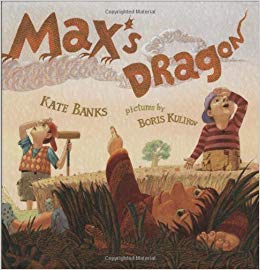
Max’s Dragon (ages 5-10) by Kate Banks
This book is a celebration of imagination!   As his brothers play croquet, Max begins his magical quest by sitting under an umbrella (though there is no rain) and brainstorming rhyming words.  His words conjure up and manipulate his imaginary dragon’s activities.  For instance, when he sees a giant dinosaur in the clouds over taking his dragon, he says, “If my dragon isn’t faster, there’ll be a disaster.”  Later, Max states “My dragon’s sneeze makes quite a breeze” when he feels the rough winds of on oncoming storm.  The boys experience how their imaginations and their words bring adventure, amusement, and accord between them. 
Because this book also uses rhyming words as a major component of the story, it is a good opportunity to teach and/or practice this early reading skill.   It would be fun to practice a rhyming game or activities.  Here are a few ideas:  Online Rhyming Games, Fun Activities for Teaching Rhyming Words, and Rhyme Lesson Plan.


Alexander’s Pretending Day (ages 4-8) by Bunny Crumpacker
Alexander draws pictures at the table as his mother reads the newspaper.  He asks his mom to pretend he is a mouse.  She plays a long and gives him a snack (cheese).  Enjoying his mom’s attention and his imaginative world, Alexander pretends he is an angry lion, a fast train, a mean monster, and a large dinosaur.  Each time he looks to his mother for affirmation and attention.  She lovingly and wisely responds to each one of his imaginative rides.  I love the last page when he asks her what she would do if she did not have a boy like him.  It is a tender mommy moment meant to be experienced!  
Captain Bob Takes Flight (ages 3-7) by Roni Schotter
Using a big box and lots of household items, Captain Bob becomes the fiercest flyer that ever flew in the cloud covered skies!  As he zooms off the cluttered bedroom runway, he scoops up unidentified low lying objects (such as socks) and spots the man on the moon (his lamp with an astronaut figure next to it).  He takes time to relax and write out a sky message that follows his plane through the clouds.  It is only a southerly wind (his mother’s voice) that brings him back to a hungry reality---for lunch.  Also, this imaginative selection uses many alliterative phrases and vivid pictures. 
Firefighter Ted (ages 3-8) by Andrea Beaty
Ted wakes up to the smell of smoke which begins his day of imagination as a firefighter.  He does his best to put out “fires” throughout the day and to rescue those in need, but unfortunately, his good intentions are not always wanted or needed.  Ted usually leaves people speechless.  For instance, he rescues 1 cat, 2 dogs, and 3 tricycles, but he does so by putting them in the tree.  Later, he attempts to “help” the school principal and the class during the science fair.  Each endeavor ends in disaster which Ted appears oblivious to.  When there is a real fire though, Ted springs into action to help save the day.  The story closes with him beginning to imagine what it would be like as an artist. 

Other Good Books in this Category:
The Puddle  (ages 3-7) by David McPhail
Using a boat and a rain puddle, a little boy has an imaginative experience with a turtle, an alligator, a frog, a pig, and an elephant on a rainy day. 

A Box Can be Many Things (ages 4-8) by Dana Meachen Rau
Two siblings use a box to create a cave for a bear,  a car for a race, a house for a visit, and a cage for a bird.  Even when the box is in pieces after all their imaginative play, they find it has one more use.

A Better Way to Teach Theme: Why I Built the Jory John Now Prove It Series

If you’ve ever taught theme, you know the moment. Students finish a story, you ask “What’s the theme?” — and suddenly you’re flooded with a...