Showing posts with label sibling rivalry. Show all posts

Tuesday, July 5, 2016

Tantrums, Hurt Feelings, and Selfishness: Helping Children Deal With Their Emotions

Books are ideal springboards for discussing a wide array of emotional responses.  With picture books, parents and educators can help children identify their feelings and deal with them in an healthy manner. The following 10 picture books focus on some of the most common emotional issues in early childhood.


When Sophie’s Feelings Are Really, Really Hurt
Molly Bang
Hurt Feelings, Dealing with Criticism
Sophie paints a picture in a creative rather than realistic manner. A classmate criticizes her, causing her to feel hurt and sad.  A thoughtful teacher helps them deal with the conflict.


Duck, Duck, Dinosaur
Kallie George/Oriol Vidal
Jealousy, Self-Centeredness, Sibling Rivalry, Competitiveness
Feather, Flap, and Spike are siblings who each want to stand out and get their mother’s attention.  They compete over who is the biggest, sweetest, and funniest.  However, the trio realize it is better to play and to cuddle together than to argue over who is the “best.”


Elephantantrum!
Gillian Shields/Cally Johnson-Isaacs
Tantrum, Self-Centeredness, Manners
Ellie has everything, but she wants more.  She refuses to get out of bed until her father buys her an elephant.  When it arrives, he takes over her toys, her room, and even her place at school.  He demands she do everything for him.  If she doesn’t, he throws a huge Elephantantrum!  This role-reversing experience teaches Ellie the importance of manners, sharing, and relationships.


Horrible Bear!
Ame Dyckman/Zachariah OHora
Tantrum, Rudeness, Mean Words
A girl peaks into a bear’s cave while he sleeps.  Rolling over, he accidently breaks her kite.  Even though she is the one invading HIS space, she calls him a “horrible bear” and stomps off.  Now, the bear is angry!  Together, they learn that acting out in an angry and selfish manner is not the solution.

How Do Dinosaurs Say I’m Mad?
Jane Yolen/Mark Teague
Tantrum, Angry, Selfishness
Sometimes, dinosaurs get mad like when they don’t get their way, when they are told “no,” or when they have to take a nap.  Sometimes they have dinosaur-sized tantrums.  Other times they count to ten, take a time out, breathe calmly, and obey.   Most importantly, they hug and apologize.


Crankenstein
Samantha Berger/Dan Santat
Grumpy
Beware of Crankenstein!  He’s an ordinary kid who transforms into a monster of grumpiness!  Using a little humor and hyperbole, children will see what a crabby person looks and acts like (so hopefully they won’t want to be one).
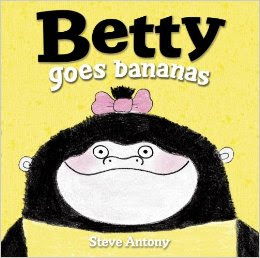


Betty Goes Bananas
Steve Anthony
Frustration, Tantrum
Betty loves bananas.  She just cannot seem to get it open, so she throws a huge frustrated tantrum!  Her friend toucan helps her.  Then, she gets mad because she wanted to do it by herself.  Can Betty learn how to control her frustration?


Clark the Shark
Bruce Hale/Guy Francis
Boisterous Behavior
Clark is rowdy.  He is enthusiastic about life—sometimes just a bit much for his friends and teacher.  With a little guidance and some self-control, he learns:  “There’s a time and place for everything” and “Sometimes you stay cool.


Mine!
Sue Heap
Selfishness, Siblings
Amy loves her blankie and toys.  When her siblings want to join in the fun, she responses selfishly with, “Mine!”  After seeing how sad her behavior makes her brothers, she decides to share.


Grumpy Pants
Claire Messer
Grumpy
Penguin is in a bad mood.  No matter what he does, he just can’t seem to shake it!  He learns some healthy ways to help him change his perspective.

Sunday, July 3, 2016

Sisters (Raina Telgemeier)


Title: Sisters

Author/Illustrator:  Raina Telgemeier

Target Ages:  8 and up

Genre:  Graphic Novel Autobiography

Awards: Eisner Award (for graphic novels)

Publisher Summary:
“Raina can't wait to be a big sister. But once Amara is born, things aren't quite how she expected them to be. Amara is cute, but she's also a cranky, grouchy baby, and mostly prefers to play by herself. Their relationship doesn't improve much over the years. But when a baby brother enters the picture, and later, when something doesn't seem right between their parents, they realize they must figure out how to get along. They are sisters, after all.”

Evaluation:
Recently, I saw Sisters on a list of top 10 books for middle grade readers, so I put it on hold at the library. I did not realize it was a graphic novel nor do I have much experience with the genre.  After reading this book though, I am more likely to give a graphic novel a second look.

The story is genuine and realistic. The family is far from perfect. For instance, Raina and Amara have a typical sibling relationship. They irritate each other.  They torment each other.  They argue with each other.  Most importantly, they love each other despite everything—though it is often difficult to see.  Their family experiences job loss, new sibling arrivals, and separation (hinting at possible divorce). 

Characterization is multi-faceted. Raina’s hopes, fears, and insecurities are depicted, making her relatable to the target audience. She wants her own space and independence while also longing for acceptance from her peers and family. For instance, at the family reunion she tries to figure out where she belongs. The younger kids are rambunctious. The adults are all arguing.  However, her slightly older peers make her feel small and insignificant. Raina puts on make-up (which is not in her normal characterization) and tries to connect with them, but they pretty much ignore her. 


The complex plot is non-linear. The main structure revolves around a road trip to a family reunion taking place 4 states away. However, there are numerous flashbacks beginning with when Raina is in preschool longing for a baby sister.  Other flashbacks help round out her characterization and relationship with her family, particularly with Amara. 

Young readers will gain experience deciphering visual literacy clues.  While the text is significant, the pictures are vital to understanding the plot and characterization. Readers have the added practice of determining when the flashback sequences are starting and ending.  For instance, they tend to be in more muted, dream-like tones and the characters are younger (most of the time). In addition, there is always a full-page signal that the story is moving back to the present. 

Other key elements of plot are appealing. Foreshadowing piques readers’ interest. Early in the story, readers learn about an unspecified (but apparently dreadful) “incident.” The author craftily sets it up by depicting past related experiences as well as returns to it later to reveal and to wrap up that plot point. Suspense is also incorporated. When the family van breaks down in the middle of the desert, Amara and Raina are left alone for 4 hours in the vehicle while their mother and younger brother go get help. (I was pretty stressed out!  Glad it is a children’s book.)  Finally, a healthy dose of humor is sprinkled throughout.  From waking up in front of everyone at the family reunion cuddling with a teddy bear to listening to her mother sing “Kum-ba-yah” around the campfire to the “blackberry” incident, middle grade readers will laugh—though probably with a bit of embarrassment hoping no one catches them in one of those moments.

The story is autobiographical.  It includes some photos of the real Raina and Amara as children.  Currently, two additional books are in the series Smile and Drama, which I am anxiously awaiting my turn in the library queue to read.

Overall, the story is engaging, heart-warming, and funny.  It is ideal for middle grade and reluctant readers. 

For other Marvelous Middle Grade Monday recommendations, visit Shannon Messenger's weekly round up.  


Saturday, June 25, 2016

Author Spotlight: Chris Gall


I discovered Chris Gall’s work only recently when I came across one of his Dinotrux’s books. Struck by his amazing style, I checked out several of his other books.

Chris Gall has been working as an illustrator for more than 20 years.  With close to a dozen picture books published so far, he has already made an indelible mark on the industry. Working as both author and illustrator on most of his books, he has shown innovative vision and extraordinary talent. His style has similarities to other beloved illustrators like David Wiesner, Steven Kellogg, and Chris Van Allsburg.

Like Wiesner, he has an amazing imagination. Gall brings the ordinary and the fantastic, mashes them together, and creates a captivating experience. For example, in Dear Fish he takes the ideas of pen pals and company visiting to hyperbolic and astonishing levels. Substitute Creature begins with every day occurrences in the classroom and moves them to outrageous flights of fancy.

Like Kellogg, he utilizes every space, including end, copyright, and title pages. Gall uses his illustrations as much as the text to move the storytelling forward and make little detours of humor. For instance, in The Revenge of the Dinotrux the bots escape after being “civilized” by school and books. Left in the tracks is the book Escape from Alcatraz. Also, there are often bits of irony and pun included. In Dear Fish, puns are abundant, such as when a school of fish invades a classroom and swordfish help a carpenter with his work. 

Like Van Allsburg, he is a profound storyteller.  Gall’s stories are not about animals or Dinotruxs.  Instead, his characters are often metaphors or symbols. The unruly Dinotruxs symbolize undesirable behaviors often found in children like impatience, thoughtlessness, and selfishness. Dog vs. Cat represents a blended family though it could be more universally connected to learning to get along with others. 

Gall’s illustrations are bold. They often have a three-dimensional appearance.  Sometimes, he employs techniques commonly found in graphic novels like blocking and multiple scenes on a page. A variety of mediums work together to create each illustration.  He frequently uses more traditional means like clay-engraved art or colored pencils with digital effects. Other books have revolutionary tools. Dinotrux was created using bearskins and stone-knives while Substitute Creature utilized bat wings, toad juice, and the bundled whiskers of a black cat. :)

Finally, his books often have a twist at the end. In Awesome Dawson the final scene depicts Dawson using one of his inventions to help in an alien invasion while Dinotrux simply has the eyes of one of the bots flash on. These types of endings prompt a discussion of inference and provide opportunities for creative writing. 

Like a great literary fiction, there are layers and layers to unpack in his books.   Look closely at the illustrations as well as their interconnectedness with the text. Chris Gall's books will surprise you with new insights and small treasures with each reading.

Peter Alan writes a letter to the fish, places it in a bottle, and throws it out to sea. The next morning he wakes up to find the fish have taken him up on his offer to visit. They are everywhere—in the bathtub, at the baseball game, in the yard, and at the rodeo.  After numerous disruptions, he writes the fish another letter to encourage them to go back home.  Eventually, life returns back to normal.  Until, Peter Alan finds a note on the beach. This one is from the fish! 

Teaching Connections:  Puns (primarily in the illustrations), Onomatopoeia, Strong Verbs, Letter Writing, Inference 

Dawson spends all his time repurposing toys and household items into new imaginative and useful creations.  Hating to do chores, he comes up with a solution—that ends up causing so much trouble, he wishes he was at home doing chores!  Dawson stops the “monster” machine, but he does not stop coming up with ways to make chore time go more quickly and efficiently.  

Teaching Connections: Simple Machines, Robotic, STEM, Recycling, Problem Solving, Inference

When a riotous class gets an unexpected substitute teacher, they think it is an opportunity for mischief and mayhem. Their substitute is not what they expected—nor what the audience thinks either. As he presents hard cases from past classes of daydreamers, doodlers, and paste-eaters, the audience is treated to highly imaginative and disastrous consequences that ensue.  Students are not fully convinced though until the substitute creature reveals his own past delinquency. 

Teaching Connections:  Inference, Irony, Creative Writing, Poetry, Rhyme, Hyperbole

Cat and Dog are far from being two peas in a pod. Dog is a playful mess.  Cat is seriously organized. Their idea of fun could not be more different. When trying to co-exist peacefully doesn’t work, it becomes an all out war.  An unexpected event prompts a truce though.  Will the peace last?   

Teaching Connections: Sibling/Step-Sibling/Friendship Relationships, Problem Solving, Puns, Hyperbole

Dinotrux, part-truck, part dino demolition dynamos, ruled the world millions of years ago. Rude Rollodon, greedy Garbageadon, and edgy Dozeratops were just a few of the disruptive Dinotrux.  Ironically, they are so uncivilized that even the cave people are fussing at them! A terrible storm causes most of Dinotrux to rust and sink down, down, down into the mud.  The smart ones migrate south where they slowly lose their misbehaving ways and ancient features. Now they are always on the job and never quit working hard.  A prehistoric discovery may change everything though!

Teaching Connections:  Manners, Dinosaurs, Onomatopoeia, Irony

After spending decades in a museum being poked, prodded, and mistreated, Tyrannosaurus Trux leads the other Dinotrux out into the modern world. Reminiscent of a Godzilla take-over (with lots of humor and irony), they wreak havoc on the town. The mayor sends them to school to learn “how modern trucks behave.”  School seems to be helping to tame their wild ways…at least until they are on the loose again. When the Dinotrux are tracked down deep in the woods, everyone is afraid to see what is causing all the commotion.  

Teaching Connections:  Manners, Dinosaurs, Onomatopoeia, Irony, Problem Solving

Gall has two new books premiering later this year. Nanobots will be released in August 2016. The Ninjabread Man with author C.J. Leigh is due out September 2016.

Sunday, March 31, 2013

Watsons Go to Birmingham (Christopher Paul Curtis)


Summary of The Watsons Go to Birmingham 1963 (by Christopher Paul Curtis):
Kenny and his family of “weird” Watsons live in Flint during the tumultuous civil rights era.  In their middle class, black community in Michigan, they are insulated from much of the tension and violence.  The novel focuses on their everyday lives and relationships, which ranges from humorous when Byron gets his tongue stuck to the car mirror during a winter storm to endearing as the family sits around listening to music on their new car record player to reflective as Kenny learns how to be a friend to the neighborhood newbies.  The family decides to take a trip down to Birmingham, Alabama to visit extended family.  During their stay, they experience a racial terrorist attack on a church in the community they are visiting. 

Evaluation: 
I had a fond recollection of this middle grade novel after reading it several years ago, but I had honestly forgotten how endearing the voice and timeless the story until I recently reread it.  Author Christopher Paul Curtis so beautifully captures the perspective of a 9 year old boy, Kenny.  He has an innocence about him that tempers the tragedy and tension, which is ideal for young readers.  Kenny, also, has a mischievous-side, bringing about much of the humor and lightness in the novel. 

I love the family dynamics.  There is sibling rivalry—particularly between Kenny and his older brother Byron--but it is clear the boys love each other.  Kenny looks up to his brother, known the “juvenile delinquent,” even though Byron often torments him.  Also, Byron saves Kenny physically and emotionally during the course of the story.  The parents have a strong, through not overbearing, presence in their children's lives.  The youngest child plays the smallest role in the action, mostly that of a tattle tale and conscious to the two older boys.  Each person, including the parents, is flawed, but ultimately, they all look out for each other and love each other. 

Kenny is often naive and immature in social situations.  Throughout the novel, he grows as a friend, family member, and person.  The most significant growth comes after their visit to Birmingham which causes him to face his own mortality as well as that of his younger sister and his community.  Back in Flint, it takes him several weeks to go though a healing and mourning process.  Just as everything is not clear and neatly tied up in life, so is Kenny still left with some uncertainty even has he moves forward with hope. 

The author does an excellent job with the historical time period and tragic bombing.  Much of the oppressive and dangerous backdrop is understated, which works well for the child perspective and reader.  At the same time, the events are ideal for discussions on recent tragedies and dangers that young readers are familiar with (or may even have some first hand experience). 

Christopher Paul Curtis is an impressive and memorable writer.   He has two other middle grade novels that tackle issues that are unique to the African-American culture while transcending it with characters and experiences that are universal (Bud, Not Buddy and Elijah of Buxton).  All three books have been awarded the Newbery or Newbery Honor award, which is quite an impressive feat.  In addition, he has published a couple middle grade mysteries.  I had the pleasure of hearing him speak and meeting him at a conference.  He was warm and friendly as he met his many fans as well as entertaining and engaging as a speaker--all qualities that come through his writing.  For any middle grader reader or fan, he is a must read! 

I recommend The Watsons Go to Birmingham 1963 for ages 9 and up.  It is also ideal for classroom and home schooling curriculums because of the outstanding characterization, excellent literary qualities, and connections to a pivotal historical era.

Teaching Opportunities:
  • History:  read during a unit study on the 1960’s and/or civil rights movement
  • Music:  Kenny has a favorite song he loves to listen to over and over again; play it and discuss why he might be so drawn to it; then, listen to other popular songs of the era and discuss
  • Biography:  read about famous civil rights leaders like Martin Luther King, Jr. and Rosa Parks
  • Compare/Contrast:  discuss similarities and differences in Kenny’s life and that of contemporary middle graders
  • Character Education: discuss the qualities of a good friend; apply the list to Kenny to evaluate if he would be  a good friend and to selves
  • Similes and Metaphors:  have the students pick a character or conflict in the book; next, ask them to pick an animal or thing to describe the person or conflict and explain why they chose it; write similes and metaphors using the animals or things
  • Picturebook Literature:  read other experiences during this historical era such as Ruth and the Green Book, Back of the Bus, Grandma's Pride, When Grandma Sings, and Goin' Someplace Special. 
Visit Shannon Messenger, the hostess of Marvelous Middle Grade Monday, for other great middle fictions.

Friday, August 3, 2012

Fairy Tale Friday: Cinderella (Multicultural)


Reading Mufaro’s Beautiful Daughters a few weeks ago, I was prompted to think about Cinderella stories.  It seems that nearly every culture has at least one such tale.  Mufaro’s Beautiful Daughters is not at all like the Western fairy tales I have read.  There is no evil step-mother.  The protagonist does not sit around and wait for fate. Instead, she goes on quest to meet the prince.  Along the way she completes different "tests."  Her snake companion (rather than birds and mice) is the prince in disguise!   I began reading similar fairy tales to examine:  What makes a narrative a Cinderella story?


In most contemporary Cinderella tales or retellings, a step-mother and sister(s) are the cause of hardship and oppression.  However, in The Egyptian Cinderella (by Shirley Climo) the protagonist (Rhodopis) is a slave, a Greek girl stolen as a child from her parents.   Three other slave girls in the house are envious of Rhodopis because of her blond hair, fair skin, and great beauty.  Like many of the tales, there is a benevolent father-figure.  In this case, it is the slave master.  He is oblivious of the ill-treatment the girl receives from the others.   Interestingly, in some early Cinderella tales, though, the father is the cause of the girl difficulties.   These tales have been modified or fallen out of use.   According to the Author’s Note, the tale of Rhodopis is one of the world’s oldest Cinderella stories, recorded in the first century B.C.   It is believed to be based on some truth because there was a Greek slave girl by the same name that married Pharaoh Amasis and became Queen of Egypt. 


The Korean Cinderella (by Shirley Climo) follows many of the familiar plot elements, beginning with the step-mother and step-sister being the nefarious task masters.   In this version, the protagonist is named Pear Blossom.  Most of the Cinderella protagonists are connected with nature, often through the friendship of animals.  Pear Blossom is connected by her name and through her only friends, the crickets.   She must complete several tasks in order to earn the right to attend the ball.  Each one is impossible but for the help of an animal (frog, sparrows, ox).  She eventually attends the party and marries a nobleman, rather than a king, who locates her using her lost sandal.


Adelita (Tomie dePaola) is a Mexican Cinderella story.  There are no animal helpers or direct connections to nature.   Instead, she receives help from a former servant who was her nurse maid when she was growing up.  There is no magic either. The beloved old woman reveals the location of her mother’s chest that holds what she needs to prepare for the party at the wealthy rancher’s home.  With one other exception, the other tales all use some sort of slipper or shoe.  Adelita is distinguished by her reboza (a type of shawl).  She hangs it outside her window after the party which allows the rancher’s son to identify her after the party. 


One Indonesian version is The Gift of the Crocodile (by Judy Sierra).  In this region, Cinderella tales are characterized by a heroine losing something in the river and finding a magical helper.  In this narrative, a crocodile befriends the protagonist, Damura.   Grandmother Crocodile helps the kind-hearted girl by not only retrieving her sarong but replacing it with a far lovelier one.  When the feast for the prince occurs, Grandmother Crocodile provides all that Damura needs to attend.  She successfully wins over the prince, but the step-mother and step-sister are eaten up with jealousy.  They feign kindness and reconciliation to lure her on a boat ride. The duo pushes Damura into the river where she is eaten by a crocodile.  Grandmother Crocodile rescues her.  The step-mother and step-sister flee.  From then on, Damura and her children safely splash in the river, talk to the animals, and play in the shade of the trees (again that connection to nature). 


My favorite multicultural version is Sootface (by Robert D. San Souci), an Ojibwa Cinderella Story.  Sootface overcomes horrible bullying not only from her jealous sisters but from the rest of the village.  Because she works hard all day, her hair is singed, her face is dirty, and her clothes worn out.  She does not rely on magic or a helper to transform her.  Instead, her resourcefulness and diligence provide her with the necessary items.  Another unique plot element is the “prince.”  He is a famed hunter with the ability to become invisible.   One day, he tells his sister to announce that he will marry the woman who can see him, which means the woman is kind and honest.  To verify the maiden can in fact see him, she must describe his bow.  Of course, all the women try but fail.  Sootface is the only one who is able to truly see him.  The hunter changes her name to Dawn-Light, and they marry.  Every one is pleased, except her sisters who now have to do all the cooking and cleaning. 

From all these tales, it is clear there are many variations.  As a result, defining what makes a Cinderella tale a Cinderella tale is a challenge.  I realize, also, that I just reviewed a sampling.  From it, I can conclude that in all the tales a protagonist must overcome great hardship (usually as a result of family/step-family members) to become successful (which usually means finding a husband).  In all the mainstream tales, Cinderella is humble, obedient, and diligent.  Though in some tales (especially earlier ones), she had other character qualities, such as being clever, resourceful, and, even, vengeful.  The modern world’s fascination with Cinderella tales has always amazed me.  I cannot speak for all cultures, but it seems to me that what appeals most to us as Americans is that Cinderella is the quintessential icon of pulling one’s self up by his/her boot straps to be a success.  Isn’t that what the American dream is all about?

Friday, July 27, 2012

Fairy Tale Friday: Cinderella


In preparation for Fairy Tale Friday, I have been reading versions of Cinderella from various cultures.  I am making careful notes in my study.  I was hoping to complete it in time for this week's post, but I don’t want to rush it. The post will have to wait one more week.   Instead, I am sharing two of my favorite picture book retellings of Cinderella.  If you have a fairy tale post this week, add a link in the comments. 


Cinderella (illustrated by K.Y. Craft):
The text is adapted from The Arthur Rackham Fairy Book (1923) and Andrew Lang’s The Blue Fairy Book (1889).  The story follows the familiar plot line:  Father remarries and dies shortly after.  The stepmother and her two daughters treat Cinderella like a slave while they live lavishly.  Like the movie Ever After though, Cinderella actually meets the prince prior to the ball.  He sees her in the woods and becomes enamored with her beauty.  She is helping an injured bird, but quickly (and ashamedly) excuses herself and runs off.   After the step –sisters leave for the ball, the bird Cinderella helped turns into a beautiful fairy.  Like the Disney movie, the fairy turns a pumpkin, mice, rats, and lizards into the servants, horses, and coachmen.  There are two nights of dancing before Cinderella loses her glass slipper.  The prince scourers the kingdom until he finds her.  After they marry, they are renowned as “the fairest and kindest rulers the people had ever known.”  With only a few changes, this version follows the most commonly known one in America:  Disney’s.  The breath-taking illustrations in Craft's picture book make it stand out!  Craft states, “The illustrations for this story depict an imaginary setting around the time of Voltaire, who lived in seventeenth- and eighteenth-century France.”  Most of the layouts have a full-paged framed picture on one side and the text on the other.  To highlight pivotal plot details, occasion two-page spreads are used.  I am a huge fan of Craft's soft coloring and intricate details which give the pictures a magical-essence.   Her style beautifully compliments fairy tale retellings.   If you (or a little one in your home) are a fan of Cinderella tale, you MUST check this one out!


Cinderella (by Amy Ehrlich, illustrated by Susan Jeffers):
Ehrlich uses the Charles Perrault version which has many similarities to the accounts Craft utilized.  Interestingly, in this one the father does not die, but rather, he is ruled by his new wife entirely. As a result, Cinderella does not ever complain to him.  There is no pre-ball meeting between her and the prince.  Her godmother, a fairy, visits her after everyone has left for the ball. She uses magic to transform objects into all that Cinderella needs for a memorable arrival at the palace.  While at the ball, Cinderella shows her good-nature by sharing a special treat with her sisters.  At the end, the two sisters beg for forgiveness.  Not only does she forgive them, but she also gives them a place in the palace.  I adore Jeffers' illustrations which use fine-lines and delicate colors.  Like Craft, she uses the eighteenth-century attire and setting as her inspiration.  Her life-like expressions and details spill over to make two-page spreads that envelop and energize the narrative, making this book a must-read!

What is your favorite version of Cinderella?  Please share in the comments, which enters you in the Fairy Tale Friday July Giveaway.  

Friday, July 20, 2012

Fairy Tale Friday: Mufaro's Beautiful Daughters (by John Steptoe)


It is Fairy Tale Friday!  As much as I love fairy tales, I have been so busy that I have had little time to read them lately.  I am revisiting a tale I have read for years.  It was actually introduced to me in my first children’s literature course.   As I reread it, I was struck by the gorgeous illustrations and pleased with the beautiful storytelling. 

Mufaro lives in a small village with his two beautiful daughters:  Manyara and Nyasha.   Manyara is bad tempered and proud.  She treats her sister cruelly, but carefully, for her father is oblivious to it.   Nyasha always responds with kindness and humbleness.  She spends her time working a small plot of land that grows food abundantly.  A snake, she calls him Nyoka, is her companion as she works.  One day, the king calls for all the worthy single women to come to the city, so he can choose a wife.   Manyara leaves for the journey in the middle of the night, in hopes of beating her sister and the others.    She comes across a hungry boy who requests a bite to eat.  Of course, Manyara yells at him and leaves him with nothing.  Then, she is warned by an old woman of some situations ahead, but in her pride Manyara ignores her.  When she finally goes before the king, she finds a hideous monster who reveals her faults to her.  Nyasha travels with her village the next morning.  Seeing the young boy, she immediately offers him her lunch.   For the old woman, she gives her a pouch of sunflower seeds.  The pure-hearted daughter passes the tests that lie ahead.  When she goes in to see the king, there is something entirely different in the chamber.   

Evaluation
Mufaro’s Beautiful Daughters won the Caldecott Honor award for its illustrations.  For inspiration, Steptoe effectively used the ruins of an ancient city in Zimbabwe as well as the flora and fauna of the region.   The true nature’s and personalities’ of the girls comes through his realistic and powerful depictions.   The storytelling is tight, not a wasted word or scene.  Everything comes full-circle, producing a satisfying ending both emotionally and structurally.  Even though the plot elements are very different than the Western Cinderella stories, Mufaro’s Beautiful Daughters is categorized as one.  It challenged me to consider:  What makes a fairy tale a “Cinderella” story?    I’d like to hear what you think.  I will share my thoughts next week.  

Saturday, October 16, 2010

Best Dog Picture Books (Series) for Preschool to Primary

I set out to find the best dog pictures books for reading out loud together.  This topic is so broad though that I am breaking it up.  Today, I am covering the best dog picture books series (ages 0-8)*.  What struck me as I read and shared these with my children are the valuable lessons on sibling rivalry, love & acceptance, curiosity, jealousy, self-identity, community, new baby, and more. 
As someone who believes in teaching children to read with trade books (real literature) rather than basal readers (stories written to teach reading), I found that each of these series could be used for children practicing reading out loud or for those beginning to read independently. 

Ebb & Flo (ages 4-8).  This series, by Jane Simmons, is my favorite.  The focus is on the endearing friendship of Ebb, the dog, and Flo, a little girl.   Ebb & Flo and the Baby Seal is the story of Ebb finding and playing with a baby seal that has been separated from his mother.  After a delightful time playing on the beach, Ebb realizes that the baby doesn’t have a mother.  The dog is able to convince Flo to come to the beach where she notices the seal is alone.  Together, they help the seal find his mother.  This story has some fun onomatopoeia.  In Ebb & Flo and the New Friend, Ebb feels like his new friend is invading his spaces and taking away some of his attention from Flo.   When his friend is suddenly gone, Ebb realizes how much he misses him.  Soft-hued and luminous, the illustrations depict Ebb’s emotions and the enchanting setting.  Also, check out Ebb & Flo and the Greedy Gulls. 

Otis (ages 4-8).  Amanda Harvey has published a series of 3 books about a dog named Otis.  In Dog Days, Otis feels jealous of a new kitten.  As a result, he runs away temporarily, only to find out he misses the kitten—even if he is a nuisance (similar to Ebb & Flow and the New Friend).  Dog Gone chronicles Otis’ visit to the kennel.  At first, he feels insecure and sad to be there.  Eventually, Otis learns to enjoy he stay.  My favorite book of the series though is Dog Eared.  The motif is one that nearly everyone can relate to.  Another dog tells Otis he has big ears, so he begins to fret over how to hide them.  He feels inadequate and ugly.  Otis learns that his ears are special, and his owner loves them (and him).  Most importantly, Otis learns to ignore the hurtful insults of others.

Slippers (ages 4-8).  The Slippers book series is genuinely adorable.  Andrew Clements writes from the point of view of a lovable and mischievous puppy.   Slippers at Home introduces a tender picture of life with his family:  mom, dad, little girl, and baby boy. Slippers likes to play in the laundry with the baby, chew on shoes and paper, beg for food while mom is cooking, and be a part of all the family’s activities.  While in Slippers at School, Slippers sneaks in Laura’s backpack and spends the day (unbeknownst to all but a few who catch a glimpse of his antics) entertaining himself at the school.  In Naptime for Slippers, the puppy has too much energy to sleep.  Instead, he collects items around the house that represent the various family members.   When it is time to take his walk, he is too tired to go out.  Also, check out Slippers Loves to Run.  The watercolor, cartoonish pictures in this series are vibrant and inviting.   Dog owners are sure to recognize their own puppy’s behaviors in Slippers. 


Harry (ages 4-8). As I read Harry the Dirty Dog again, I was absolutely delighted with the character and story.  It was written in the 1950’s, so the pictures are not as vibrant and flashy as many contemporary tales.  Nevertheless, the story and character are timeless and endearing.   I love how he hides the scrubbing brush at the beginning only to have to pull it out in the end to convince his owners of his identity.  Harry by the Sea has a similar plot:  Harry goes exploring, ends up inadvertently being in disguise, and by happy chance reveals himself in the nick of time.  Also check out No Roses for Harry and Harry and the Lady Next Door (An I Can Read Chapter Book). 


McDuff (ages 4-8).   Rosemary Wells has penned yet another loveable series (my favorite being Max and Ruby.)  This one is set in circa 1940’s America.  Though the setting is a contrast to modern times, the adventures of McDuff transcend time.  McDuff is a white, fluffy stray puppy.   In the first story, McDuff Moves In, he wanders around looking for a place to rest and for something to eat.  Eventually, he finds a home with a doting couple who serve him his favorite snack:  vanilla rice pudding with sliced sausages.   McDuff Comes Home is about his adventure after he chases a bunny and gets lost while McDuff and the Baby illustrates the transition the family goes through with the arrival of a new baby. The soft, realistic illustrations beautifully depict McDuff’s expressions and body language and his warm relationship with his family.  This series is appropriate for young readers to tackle independently, though there are some challenging words not found in the others.  There are several other titles in this series:  McDuff Goes to School, McDuff Saves the Day, McDuff Wild Romp, McDuff’s Christmas, and McDuff’s New Friend. 
Honorable Mentions:
Angus (ages 2-5).  This classic series about a black terrier, by Marjorie Flack, is a must read.  Be sure to check it out. 
Biscuit (ages 2-5).  Alyssa Satin Capucilli writes this series that is wonderful for preschool age children learning to read.  The pages only have a few simple words while the pictures are appealing.
Clifford (ages 0-5).  Norman Birdwell’s series about Clifford the big red dog is much beloved by young readers.  Check out this site with games and activities.
*I give an approximate age for books, but it is only a ballpark number, particularly for picture books.  I think all ages can enjoy them! 

Beyond the Story: Why Meaningful Nonfiction Belongs in Literature Instruction

Teaching literature involves more than helping students understand what happens in a story. Students also need to understand the ideas, conf...