Showing posts with label jealousy. Show all posts

Tuesday, July 5, 2016

Tantrums, Hurt Feelings, and Selfishness: Helping Children Deal With Their Emotions

Books are ideal springboards for discussing a wide array of emotional responses.  With picture books, parents and educators can help children identify their feelings and deal with them in an healthy manner. The following 10 picture books focus on some of the most common emotional issues in early childhood.


When Sophie’s Feelings Are Really, Really Hurt
Molly Bang
Hurt Feelings, Dealing with Criticism
Sophie paints a picture in a creative rather than realistic manner. A classmate criticizes her, causing her to feel hurt and sad.  A thoughtful teacher helps them deal with the conflict.


Duck, Duck, Dinosaur
Kallie George/Oriol Vidal
Jealousy, Self-Centeredness, Sibling Rivalry, Competitiveness
Feather, Flap, and Spike are siblings who each want to stand out and get their mother’s attention.  They compete over who is the biggest, sweetest, and funniest.  However, the trio realize it is better to play and to cuddle together than to argue over who is the “best.”


Elephantantrum!
Gillian Shields/Cally Johnson-Isaacs
Tantrum, Self-Centeredness, Manners
Ellie has everything, but she wants more.  She refuses to get out of bed until her father buys her an elephant.  When it arrives, he takes over her toys, her room, and even her place at school.  He demands she do everything for him.  If she doesn’t, he throws a huge Elephantantrum!  This role-reversing experience teaches Ellie the importance of manners, sharing, and relationships.


Horrible Bear!
Ame Dyckman/Zachariah OHora
Tantrum, Rudeness, Mean Words
A girl peaks into a bear’s cave while he sleeps.  Rolling over, he accidently breaks her kite.  Even though she is the one invading HIS space, she calls him a “horrible bear” and stomps off.  Now, the bear is angry!  Together, they learn that acting out in an angry and selfish manner is not the solution.

How Do Dinosaurs Say I’m Mad?
Jane Yolen/Mark Teague
Tantrum, Angry, Selfishness
Sometimes, dinosaurs get mad like when they don’t get their way, when they are told “no,” or when they have to take a nap.  Sometimes they have dinosaur-sized tantrums.  Other times they count to ten, take a time out, breathe calmly, and obey.   Most importantly, they hug and apologize.


Crankenstein
Samantha Berger/Dan Santat
Grumpy
Beware of Crankenstein!  He’s an ordinary kid who transforms into a monster of grumpiness!  Using a little humor and hyperbole, children will see what a crabby person looks and acts like (so hopefully they won’t want to be one).
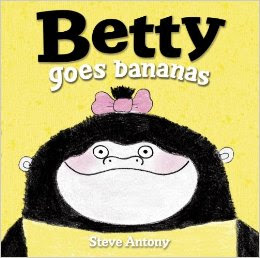


Betty Goes Bananas
Steve Anthony
Frustration, Tantrum
Betty loves bananas.  She just cannot seem to get it open, so she throws a huge frustrated tantrum!  Her friend toucan helps her.  Then, she gets mad because she wanted to do it by herself.  Can Betty learn how to control her frustration?


Clark the Shark
Bruce Hale/Guy Francis
Boisterous Behavior
Clark is rowdy.  He is enthusiastic about life—sometimes just a bit much for his friends and teacher.  With a little guidance and some self-control, he learns:  “There’s a time and place for everything” and “Sometimes you stay cool.


Mine!
Sue Heap
Selfishness, Siblings
Amy loves her blankie and toys.  When her siblings want to join in the fun, she responses selfishly with, “Mine!”  After seeing how sad her behavior makes her brothers, she decides to share.


Grumpy Pants
Claire Messer
Grumpy
Penguin is in a bad mood.  No matter what he does, he just can’t seem to shake it!  He learns some healthy ways to help him change his perspective.

Friday, July 20, 2012

Fairy Tale Friday: Mufaro's Beautiful Daughters (by John Steptoe)


It is Fairy Tale Friday!  As much as I love fairy tales, I have been so busy that I have had little time to read them lately.  I am revisiting a tale I have read for years.  It was actually introduced to me in my first children’s literature course.   As I reread it, I was struck by the gorgeous illustrations and pleased with the beautiful storytelling. 

Mufaro lives in a small village with his two beautiful daughters:  Manyara and Nyasha.   Manyara is bad tempered and proud.  She treats her sister cruelly, but carefully, for her father is oblivious to it.   Nyasha always responds with kindness and humbleness.  She spends her time working a small plot of land that grows food abundantly.  A snake, she calls him Nyoka, is her companion as she works.  One day, the king calls for all the worthy single women to come to the city, so he can choose a wife.   Manyara leaves for the journey in the middle of the night, in hopes of beating her sister and the others.    She comes across a hungry boy who requests a bite to eat.  Of course, Manyara yells at him and leaves him with nothing.  Then, she is warned by an old woman of some situations ahead, but in her pride Manyara ignores her.  When she finally goes before the king, she finds a hideous monster who reveals her faults to her.  Nyasha travels with her village the next morning.  Seeing the young boy, she immediately offers him her lunch.   For the old woman, she gives her a pouch of sunflower seeds.  The pure-hearted daughter passes the tests that lie ahead.  When she goes in to see the king, there is something entirely different in the chamber.   

Evaluation
Mufaro’s Beautiful Daughters won the Caldecott Honor award for its illustrations.  For inspiration, Steptoe effectively used the ruins of an ancient city in Zimbabwe as well as the flora and fauna of the region.   The true nature’s and personalities’ of the girls comes through his realistic and powerful depictions.   The storytelling is tight, not a wasted word or scene.  Everything comes full-circle, producing a satisfying ending both emotionally and structurally.  Even though the plot elements are very different than the Western Cinderella stories, Mufaro’s Beautiful Daughters is categorized as one.  It challenged me to consider:  What makes a fairy tale a “Cinderella” story?    I’d like to hear what you think.  I will share my thoughts next week.  

Saturday, October 16, 2010

Best Dog Picture Books (Series) for Preschool to Primary

I set out to find the best dog pictures books for reading out loud together.  This topic is so broad though that I am breaking it up.  Today, I am covering the best dog picture books series (ages 0-8)*.  What struck me as I read and shared these with my children are the valuable lessons on sibling rivalry, love & acceptance, curiosity, jealousy, self-identity, community, new baby, and more. 
As someone who believes in teaching children to read with trade books (real literature) rather than basal readers (stories written to teach reading), I found that each of these series could be used for children practicing reading out loud or for those beginning to read independently. 

Ebb & Flo (ages 4-8).  This series, by Jane Simmons, is my favorite.  The focus is on the endearing friendship of Ebb, the dog, and Flo, a little girl.   Ebb & Flo and the Baby Seal is the story of Ebb finding and playing with a baby seal that has been separated from his mother.  After a delightful time playing on the beach, Ebb realizes that the baby doesn’t have a mother.  The dog is able to convince Flo to come to the beach where she notices the seal is alone.  Together, they help the seal find his mother.  This story has some fun onomatopoeia.  In Ebb & Flo and the New Friend, Ebb feels like his new friend is invading his spaces and taking away some of his attention from Flo.   When his friend is suddenly gone, Ebb realizes how much he misses him.  Soft-hued and luminous, the illustrations depict Ebb’s emotions and the enchanting setting.  Also, check out Ebb & Flo and the Greedy Gulls. 

Otis (ages 4-8).  Amanda Harvey has published a series of 3 books about a dog named Otis.  In Dog Days, Otis feels jealous of a new kitten.  As a result, he runs away temporarily, only to find out he misses the kitten—even if he is a nuisance (similar to Ebb & Flow and the New Friend).  Dog Gone chronicles Otis’ visit to the kennel.  At first, he feels insecure and sad to be there.  Eventually, Otis learns to enjoy he stay.  My favorite book of the series though is Dog Eared.  The motif is one that nearly everyone can relate to.  Another dog tells Otis he has big ears, so he begins to fret over how to hide them.  He feels inadequate and ugly.  Otis learns that his ears are special, and his owner loves them (and him).  Most importantly, Otis learns to ignore the hurtful insults of others.

Slippers (ages 4-8).  The Slippers book series is genuinely adorable.  Andrew Clements writes from the point of view of a lovable and mischievous puppy.   Slippers at Home introduces a tender picture of life with his family:  mom, dad, little girl, and baby boy. Slippers likes to play in the laundry with the baby, chew on shoes and paper, beg for food while mom is cooking, and be a part of all the family’s activities.  While in Slippers at School, Slippers sneaks in Laura’s backpack and spends the day (unbeknownst to all but a few who catch a glimpse of his antics) entertaining himself at the school.  In Naptime for Slippers, the puppy has too much energy to sleep.  Instead, he collects items around the house that represent the various family members.   When it is time to take his walk, he is too tired to go out.  Also, check out Slippers Loves to Run.  The watercolor, cartoonish pictures in this series are vibrant and inviting.   Dog owners are sure to recognize their own puppy’s behaviors in Slippers. 


Harry (ages 4-8). As I read Harry the Dirty Dog again, I was absolutely delighted with the character and story.  It was written in the 1950’s, so the pictures are not as vibrant and flashy as many contemporary tales.  Nevertheless, the story and character are timeless and endearing.   I love how he hides the scrubbing brush at the beginning only to have to pull it out in the end to convince his owners of his identity.  Harry by the Sea has a similar plot:  Harry goes exploring, ends up inadvertently being in disguise, and by happy chance reveals himself in the nick of time.  Also check out No Roses for Harry and Harry and the Lady Next Door (An I Can Read Chapter Book). 


McDuff (ages 4-8).   Rosemary Wells has penned yet another loveable series (my favorite being Max and Ruby.)  This one is set in circa 1940’s America.  Though the setting is a contrast to modern times, the adventures of McDuff transcend time.  McDuff is a white, fluffy stray puppy.   In the first story, McDuff Moves In, he wanders around looking for a place to rest and for something to eat.  Eventually, he finds a home with a doting couple who serve him his favorite snack:  vanilla rice pudding with sliced sausages.   McDuff Comes Home is about his adventure after he chases a bunny and gets lost while McDuff and the Baby illustrates the transition the family goes through with the arrival of a new baby. The soft, realistic illustrations beautifully depict McDuff’s expressions and body language and his warm relationship with his family.  This series is appropriate for young readers to tackle independently, though there are some challenging words not found in the others.  There are several other titles in this series:  McDuff Goes to School, McDuff Saves the Day, McDuff Wild Romp, McDuff’s Christmas, and McDuff’s New Friend. 
Honorable Mentions:
Angus (ages 2-5).  This classic series about a black terrier, by Marjorie Flack, is a must read.  Be sure to check it out. 
Biscuit (ages 2-5).  Alyssa Satin Capucilli writes this series that is wonderful for preschool age children learning to read.  The pages only have a few simple words while the pictures are appealing.
Clifford (ages 0-5).  Norman Birdwell’s series about Clifford the big red dog is much beloved by young readers.  Check out this site with games and activities.
*I give an approximate age for books, but it is only a ballpark number, particularly for picture books.  I think all ages can enjoy them! 

A Better Way to Teach Theme: Why I Built the Jory John Now Prove It Series

If you’ve ever taught theme, you know the moment. Students finish a story, you ask “What’s the theme?” — and suddenly you’re flooded with a...